

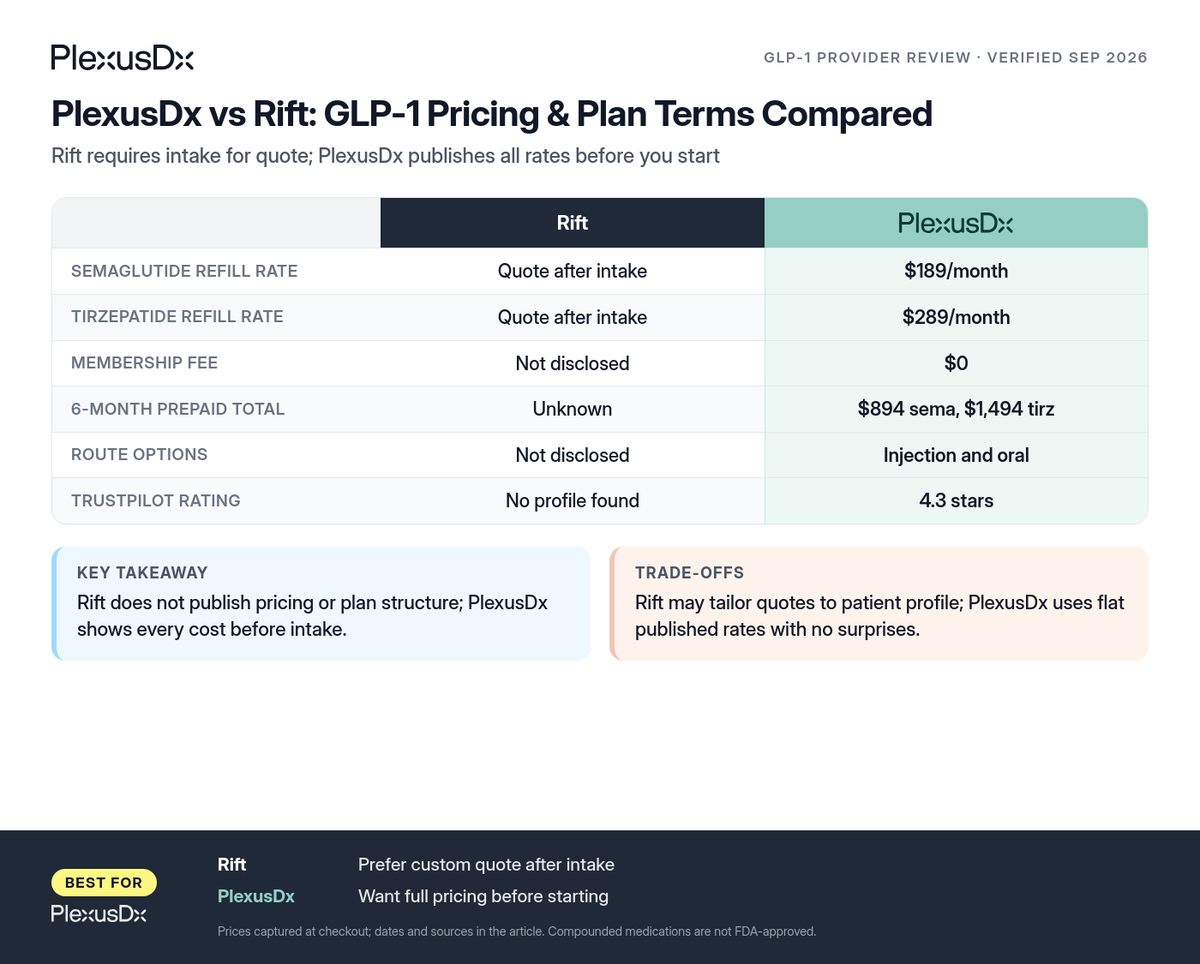
PlexusDx vs Rift: GLP-1 Pricing & Plan Terms Compared in 2026
Rift does not publish pricing or plan details on its public website; a quote is issued after questionnaire completion. PlexusDx lists month-to-month rates at $189 for semaglutide and $289 for tirzepatide, with no membership fee and prepaid multi-month discounts available.
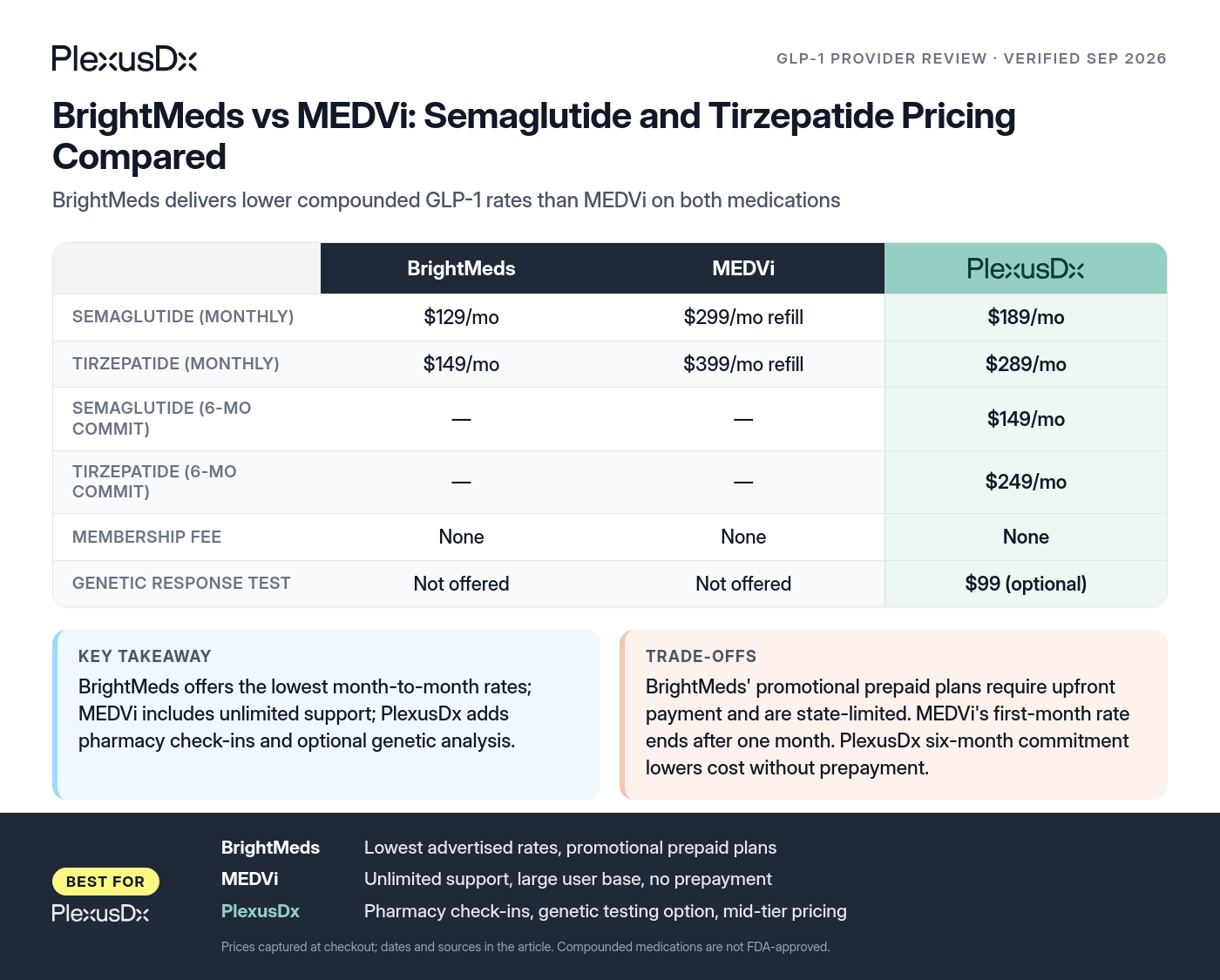
MEDVi vs Brightmeds: Injection Prices & Plans
MEDVi and BrightMeds price compounded GLP-1 injections in different shapes: MEDVi with a lower first month and a higher refill, BrightMeds with one landing-page rate per medication and optional 3-month packs. This post compares semaglutide and tirzepatide injections separately, covers dose and renewal conditions, and shows where PlexusDx fits.
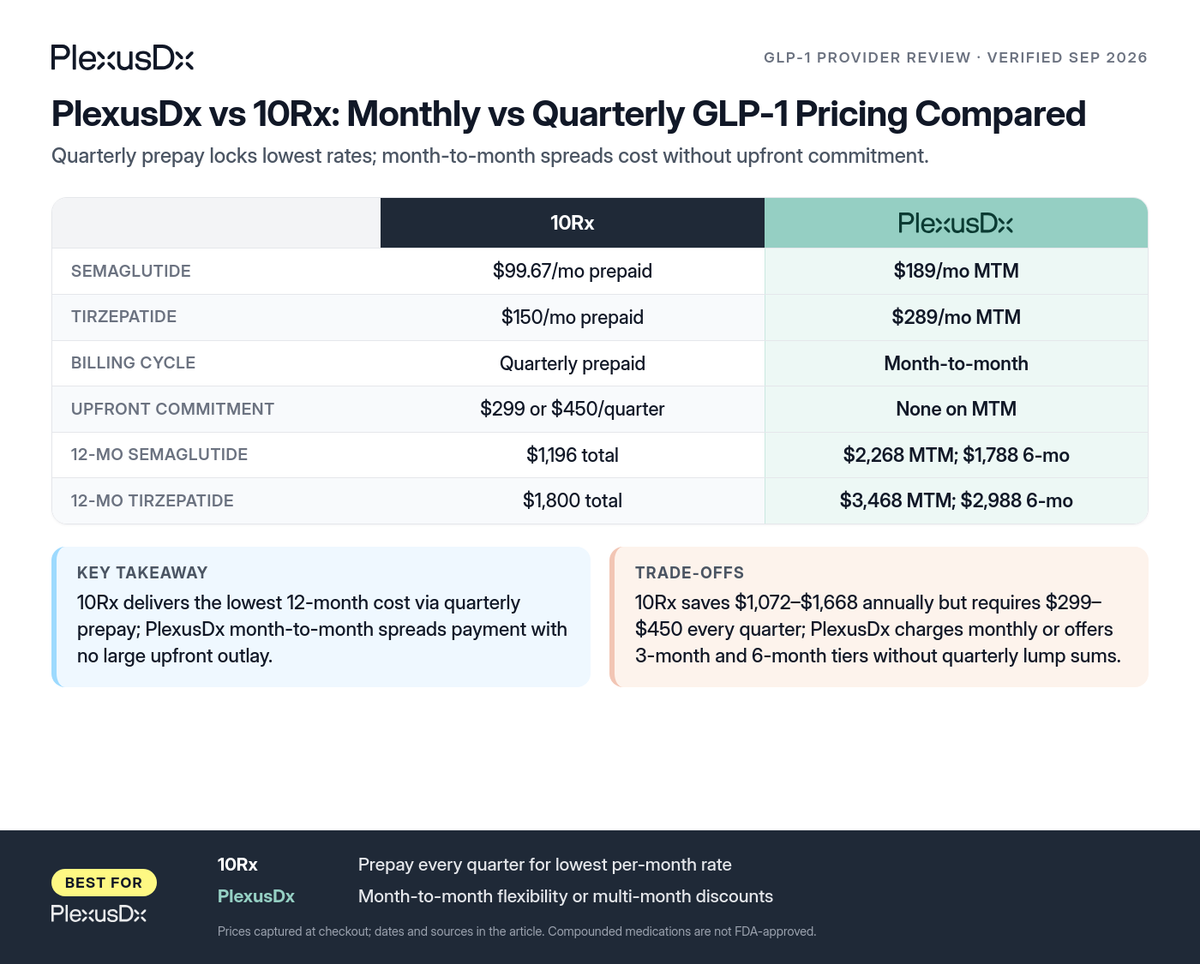
PlexusDx vs 10Rx: Monthly vs Quarterly GLP-1 Pricing Compared
10Rx's prepaid quarterly packages deliver the lowest per-month equivalent for compounded semaglutide and tirzepatide, but require upfront commitment. PlexusDx offers month-to-month flexibility and multi-month discounts. Here's what the structures cost over 12 months.

Semaglutide vs Phentermine: Mechanism, FDA Status, Evidence, and Cost
Compare Semaglutide vs Phentermine: mechanism, FDA-approval status, weight-management evidence, side-effect profile, monthly cost, and the genetic variable u...

Compounded Tirzepatide vs Zepbound: Side-by-Side on Pharmacology
Compounded Tirzepatide vs Zepbound explained — pharmacology, regulatory status, dosing context, safety profile, pricing as of 2026, plus the upstream genetic...

Zepbound vs Trulicity: Two Eli Lilly GLP-1 Drugs Compared
Zepbound and Trulicity are both Eli Lilly injections, yet they were built for different jobs: tirzepatide for chronic weight management, dulaglutide for type 2 diabetes. This independent review compares receptor mechanism, FDA labels, trial evidence, tolerability, and cost, then looks at the FTO genetics that sit upstream of either choice.

Zepbound vs Ozempic: FDA Indications and Trial Findings
This overview compares Zepbound and Ozempic through the lens of their FDA labels first, since regulatory scope drives prescribing and coverage. As of April 2026 it works through indications, dual-versus-single molecule design, trial findings, tolerability, pricing, and the shared genetic terrain.

Semaglutide vs Tirzepatide: The GLP-1 Class Landscape
This overview maps semaglutide and tirzepatide within the wider GLP-1 family, covering receptor design, the FDA approval timeline, major trial programs, class-wide safety, the list-price band, and the FTO, MC4R, and TCF7L2 variants common to every molecule in the category.

Eden vs GALA GLP-1 vs PlexusDx (2026): Pricing, Plans and Who Should Pick Which
Eden vs GALA GLP-1 vs PlexusDx (verified July 2026): Eden's $298 advertised price runs $198/mo all-in with its required membership; GALA is the lowest annual-commitment price; PlexusDx pairs six month-to-month compounded protocols with the Precision Peptide Genetic Test.

Best Foundayo Alternatives (2026): Top Providers and Where PlexusDx Fits
Compare the 2026 best Foundayo (orforglipron) providers — Ro, Found, Form Health, Sesame Care, Weight Watchers Med+, and LillyDirect — and see where the PlexusDx Weight Management Protocols fit as a cash-pay, genetics-informed alternative when insurance excludes weight-loss drugs.

Piper vs Gala GLP-1: Pricing, Pharmacy & Genetics Compared
Piper (rebranding to Polly April 29, 2026) vs Gala GLP-1 vs PlexusDx: verified April 2026 pricing, pharmacy transparency, cancellation rules, and where a genetic baseline changes the dosing conversation.

Month-to-Month GLP-1 Providers vs PlexusDx (2026): No-Membership Cash-Pay Compared
Eight month-to-month GLP-1 providers compared against PlexusDx Weight Management Protocols on real annual cost, separate membership fees, intro-price cliffs, and genetic baseline. PlexusDx Microdose at $129/mo flat, Semaglutide Injection $189, Tirzepatide Injection $289, GLP-Squared $289 — all cash-pay, no membership.

MEDVi Shipping Time: Approval, Dispensing, Delivery, and Refills
MEDVi advertises fast, free shipping but does not publish a delivery window, and the time to your door depends on three separate stages: provider review, pharmacy dispensing and carrier transit. This guide explains each stage, what MEDVi does and does not publish, where to get order updates, and how to compare providers on shipping fairly.

TrimRx vs Ro vs PlexusDx (2026): Real Costs and Genetics Compared
TrimRx vs Ro vs PlexusDx in 2026: real annual cost math, compounded vs FDA-approved branded medication, oral pill options, safety oversight, and PlexusDx's optional genetic-baseline test. Includes a four-question decision frame and pricing across PlexusDx Microdose GLP-1, Semaglutide Injection, Tirzepatide Injection, and GLP-Squared.

Oral Semaglutide vs Injectable vs PlexusDx (2026): Pill, Shot, or Compounded?
Oral semaglutide vs injectable semaglutide in 2026: Rybelsus, the new Wegovy pill, Ozempic, and Wegovy injection compared on dose, bioavailability, effectiveness, and cost — plus where PlexusDx Semaglutide Oral ($289/mo+), Semaglutide Injection ($189/mo), and Microdose GLP-1 Protocol ($129/mo flat) fit as cash-pay alternatives covering both pill and shot formats.

MEDVi vs TrimRx vs PlexusDx: Costs, Plans & Support
MEDVi, TrimRx, and PlexusDx all offer compounded GLP-1 programs, but only two publish a price you can check. This three-way comparison lines up same-medication pricing, introductory versus recurring charges, dose policies, included support, and cancellation terms as read September 22, 2026, and says plainly where the figures are unknown.

MEDVi vs Remedy Meds vs PlexusDx: Costs & Plan Terms
MEDVi, Remedy Meds and PlexusDx all offer compounded semaglutide and tirzepatide injections through telehealth, but their recurring prices, first-month structures, cancellation windows and refund rules differ. This three-way comparison lines up the published figures, marks what each provider leaves unpublished, and matches each program to a specific priority.

MEDVi vs Hers vs PlexusDx: Prices & Plan Terms
MEDVi, Hers, and PlexusDx price GLP-1 care three different ways: MEDVi with an introductory month and a recurring refill rate, Hers with a membership billed apart from branded medication, and PlexusDx with one flat monthly price. This comparison uses each company's own pages as of September 22, 2026 and keeps compounded and branded products separate.

MEDVi vs Gala GLP-1 vs PlexusDx (2026): Verified Pricing & Best Fit
MEDVi vs Gala GLP-1 vs PlexusDx compared on verified 2026 pricing, compounded vs FDA-approved status, cancellation rules, and where a genetic baseline changes the dose decision before week one.

Eden vs Ro vs PlexusDx: GLP-1 Cost and Best Fit (2026)
Eden vs Ro vs PlexusDx for cash-pay GLP-1: Eden's $298 advertised semaglutide runs $198/mo all-in with its required membership (verified July 2026); Ro pairs a $149/mo membership with branded medication billed on top; PlexusDx runs $129/mo to $349/mo month to month with an optional genetic baseline.

Best Online Tirzepatide Provider (2026): Ro, Eden, Yucca, Willow & PlexusDx Compared
Compare the best online tirzepatide providers in 2026 — Ro, Eden, Yucca Health, Willow, Sesame — against the PlexusDx Tirzepatide Injection ($289/mo) and Tirzepatide Oral ($349/mo) Protocols, with a genetic baseline option no other provider offers.

Best GLP-1 Cash-Pay Programs (2026): How PlexusDx Compares to Mochi, Eden, MEDVi, Ro and LillyDirect
How PlexusDx Weight Management Protocols compare to the major cash-pay GLP-1 programs in 2026 — Mochi, Eden, MEDVi, Ro, GoodRx Care Direct, NovoCare, and LillyDirect — on price, medication source, membership fees, and total annualized cost.

Best Compounded Tirzepatide Providers (2026): How PlexusDx Compares
Compounded tirzepatide provider rankings cycle through MEDVi, Eden, Yucca Health, Willow, and TrimRx. PlexusDx Tirzepatide Injection ($289/mo) and Tirzepatide Oral ($349/mo) compare on price, oversight, and genetic-test personalization.

Brand-Name GLP-1 Telehealth Providers: 2026 Comparison Guide
A buyer-side read of the seven brand-name GLP-1 telehealth providers (Ro, Walgreens, GoodRx, Hims & Hers, PlushCare, Sesame, WeightWatchers) covering true month-one cost, what each dispenses, and how PlexusDx compounded protocols ($129/mo to $349/mo, all-inclusive, no membership) fit when branded coverage isn't accessible.

GLP-1 vs GLP-2: How These Two Peptides Differ, Clearly Explained
GLP-1 and GLP-2 are distinct gut peptides from the same proglucagon precursor. GLP-1 receptor agonists treat type 2 diabetes and obesity. GLP-2 (teduglutide / Gattex) treats short bowel syndrome. This article explains the biology, the drugs, and the GLP-1 pathway genetics.

Zepbound vs Mounjaro: One Molecule, Two Brand Labels
Zepbound and Mounjaro are the same tirzepatide molecule from Eli Lilly, separated only by the FDA indication each brand carries. This editorial comparison, current as of April 2026, explains the labeling split, the SURMOUNT and SURPASS evidence, list prices, and the shared genetics.

Mounjaro vs Zepbound: Same Molecule, Two Brands
Mounjaro and Zepbound share a single tirzepatide molecule sold under two Eli Lilly labels. This independent comparison explains why one manufacturer uses two brand names, how their FDA indications and trials diverge, how they are priced as of April 2026, and why the underlying genetics stay identical either way.

Zepbound vs Ozempic: Dual vs Single Incretin Compared
Zepbound and Ozempic are different molecules with different receptor strategies: tirzepatide adds a GIP arm that semaglutide lacks. This editorial comparison, current as of April 2026, weighs their approved uses, SURMOUNT and SUSTAIN evidence, list prices, and shared genetic terrain.

Mounjaro vs Ozempic: Mechanism, Evidence, and Cost
This independent comparison of Mounjaro and Ozempic covers how each engages the incretin system, where their FDA labels diverge, what the SURPASS and SUSTAIN trial programs measured, published list pricing as of April 2026, and the shared genetic pathways that sit above both molecules regardless of which is prescribed.

Wegovy vs Zepbound: Two FDA Weight-Management Injectables
Wegovy and Zepbound are the two injectables FDA-approved specifically for chronic weight management, making this a rare like-for-like comparison. This independent review sets single-hormone semaglutide against dual-hormone tirzepatide on action, labels, evidence, safety, and cost, then the genetics both share as a common starting line.
