
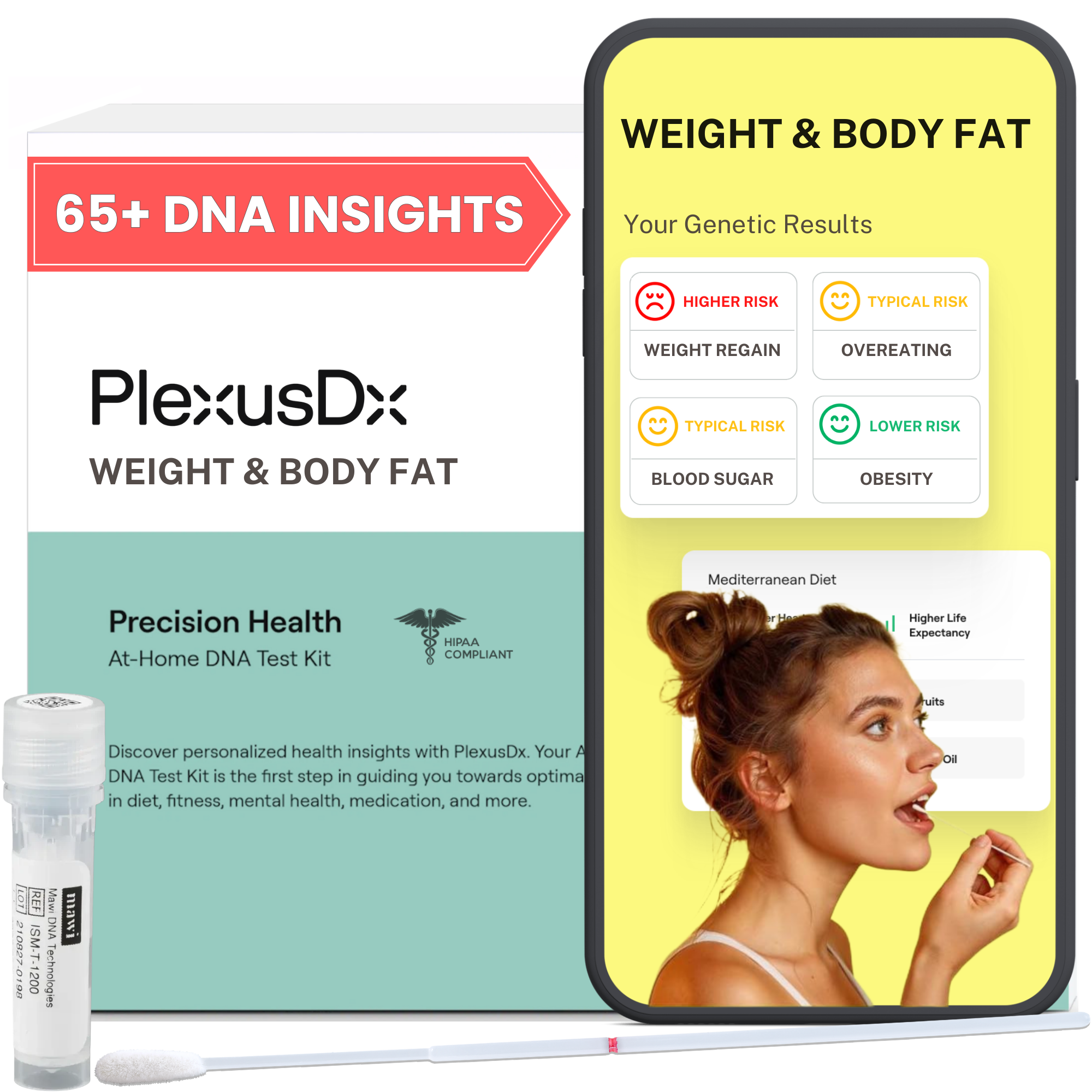



Weight and Body Fat Genetic Report
Your DNA can shape how you store fat, feel hunger, and respond to dieting. This report turns your existing PlexusDx genetic data into plain-English insights for weight and body composition.
IMPORTANT ELIGIBILITY NOTICE
You must have already completed and registered a PlexusDx genetic test to receive this report.
This product does not include a saliva kit or sample collection. If you have not completed a genetic test, this report cannot be generated.
The Weight & Body Fat Genetic Report turns your existing PlexusDx DNA into 66+ insights across 17 weight-related traits, covering appetite and eating behavior, body composition and fat distribution, macronutrient response, blood sugar and metabolism, and how you respond to weight loss and regain.
For wellness and educational use only. Not intended to diagnose, treat, cure, or prevent disease.
What you'll learn
How your appetite is wired
Whether your genes lean toward stronger hunger signals, more snacking, or emotional eating, so you can plan around them.
Where your body stores fat
How your DNA relates to body composition and fat distribution, which can shape realistic goals.
How you respond to fats and fiber
Whether your body handles dietary fat and fiber more or less efficiently, useful for tuning your plate.
Your blood sugar tendencies
How your genes relate to blood sugar response and the way you turn food into energy.
How you lose and regain weight
Genetic tendencies in weight-loss response and regain risk that can inform which strategies fit you.
Where to focus first
A clear starting point so you can take one or two areas to your provider or dietitian instead of guessing.
What your report covers
Your report looks at 66 markers across 17 weight-related traits, grouped into five plain-language areas. Each shows how your genes relate to appetite, body composition, and how you respond to food and dieting, not a diagnosis.
Appetite & eating behavior
How your genes may shape hunger, fullness, cravings, and the pull toward emotional or impulse eating.
Body composition & fat distribution
How your genes may relate to where you store fat, your body composition, and lean muscle mass.
Macronutrient response
How your body may respond to dietary fat, fiber, and the balance of macronutrients you eat.
Blood sugar & metabolism
How your genes may influence blood sugar response and the way your body turns food into energy.
Weight-loss & regain response
How your body may respond to weight loss and the tendency to regain, which can shape strategy.
You do not have to act on all of it. Pick one or two areas, talk them over with your provider or a dietitian, and build from there. This report is for wellness and education, not diagnosis.
How it works
Who this report is for
This report is for you if
This report is not
Everything included with your report
A plain-English report
Your results organized into clear, readable sections, no science degree required.
Your exact genotypes
Every variant we analyzed, with the gene and rsID, so nothing is hidden.
Trait-by-trait context
How each variant relates to the traits in this report, in everyday language.
Guidance you can act on
Practical, non-prescriptive context to bring to your provider, coach, or dietitian.
A report for life
Your DNA does not change, so you can revisit these insights any time.
Part of your bigger picture
Your results live in the PlexusDx Results Portal, alongside your other genetic reports and supplement guidance. One DNA sample keeps unlocking more over time.
- Report type
- Genetic Report (Add-on)
- Intended use
- Wellness and education only
- Where it lives
- PlexusDx Results Portal
For wellness and educational use only. Not intended to diagnose, treat, cure, or prevent disease.
Turn your DNA into a smarter weight plan.
