Last updated: May 12, 2026
Written by:
Jay Hastings
,
CEO of PlexusDx
Jay Hastings is the CEO of PlexusDx, a precision health company focused on genetic testing, blood biomarker insights, and personalized wellness recommendations. He has more than 20 years of experience across healthcare innovation, genomics, laboratory operations, healthcare investing, and strategic finance. His work has included scaling healthcare startups, leading CLIA lab integrations, and helping expand consumer access to precision health tools.
Luteinizing Hormone (LH) Blood Test: A Key Indicator of Male Hormonal Balance
Hormones act as chemical messengers that regulate nearly every system in the body, and in men, luteinizing hormone (LH) plays a central role in reproductive and hormonal health. The Luteinizing Hormone (LH) Blood Test, included in the PlexusDx Men’s Health & Wellness Blood Test, provides valuable insights into testosterone production and overall fertility. This test is performed using a simple at-home dried blood spot collection on an ADX card, making it convenient and accessible without the need for a clinic visit.
What is Luteinizing Hormone (LH)?
LH is produced by the pituitary gland, a small but powerful gland located at the base of the brain. Its release is controlled by the hypothalamus through a hormone called gonadotropin-releasing hormone (GnRH). In men, LH is primarily responsible for stimulating the Leydig cells in the testes to produce testosterone. Testosterone, in turn, is essential for sperm development, sexual function, energy levels, and overall male vitality.
LH secretion is influenced by a feedback loop. When testosterone levels are high, the hypothalamus and pituitary reduce LH production. When testosterone levels drop, LH secretion increases to stimulate more testosterone production. This feedback system ensures balance, but it can be disrupted by stress, illness, medication, or underlying health conditions.
Why LH Matters for Men
1. Testosterone Production
LH is the direct signal that tells the testes to make testosterone. Without adequate LH, testosterone levels can decline, leading to fatigue, muscle loss, reduced libido, and poor reproductive function.
2. Fertility and Sperm Development
While follicle-stimulating hormone (FSH) is more directly involved in sperm maturation, LH indirectly supports fertility by driving testosterone production. Optimal levels of both LH and testosterone are necessary for healthy sperm count and function.
3. Diagnosing Hormonal Disorders
Measuring LH can help identify whether symptoms like low sex drive, infertility, or fatigue are caused by problems in the testes or in the brain’s control centers (pituitary or hypothalamus). This makes LH testing an essential diagnostic tool in men with unexplained hormonal imbalances.
How LH is Measured
The PlexusDx LH Blood Test measures total LH levels in a dried blood spot sample. This method is accurate, simple, and can be performed at home. Because LH levels can vary throughout the day, results are interpreted alongside other hormone tests such as testosterone, estradiol, and FSH for a complete picture of hormonal health.
Reference Ranges for LH in Men
Laboratory reference ranges may vary slightly, but typical values are:
-
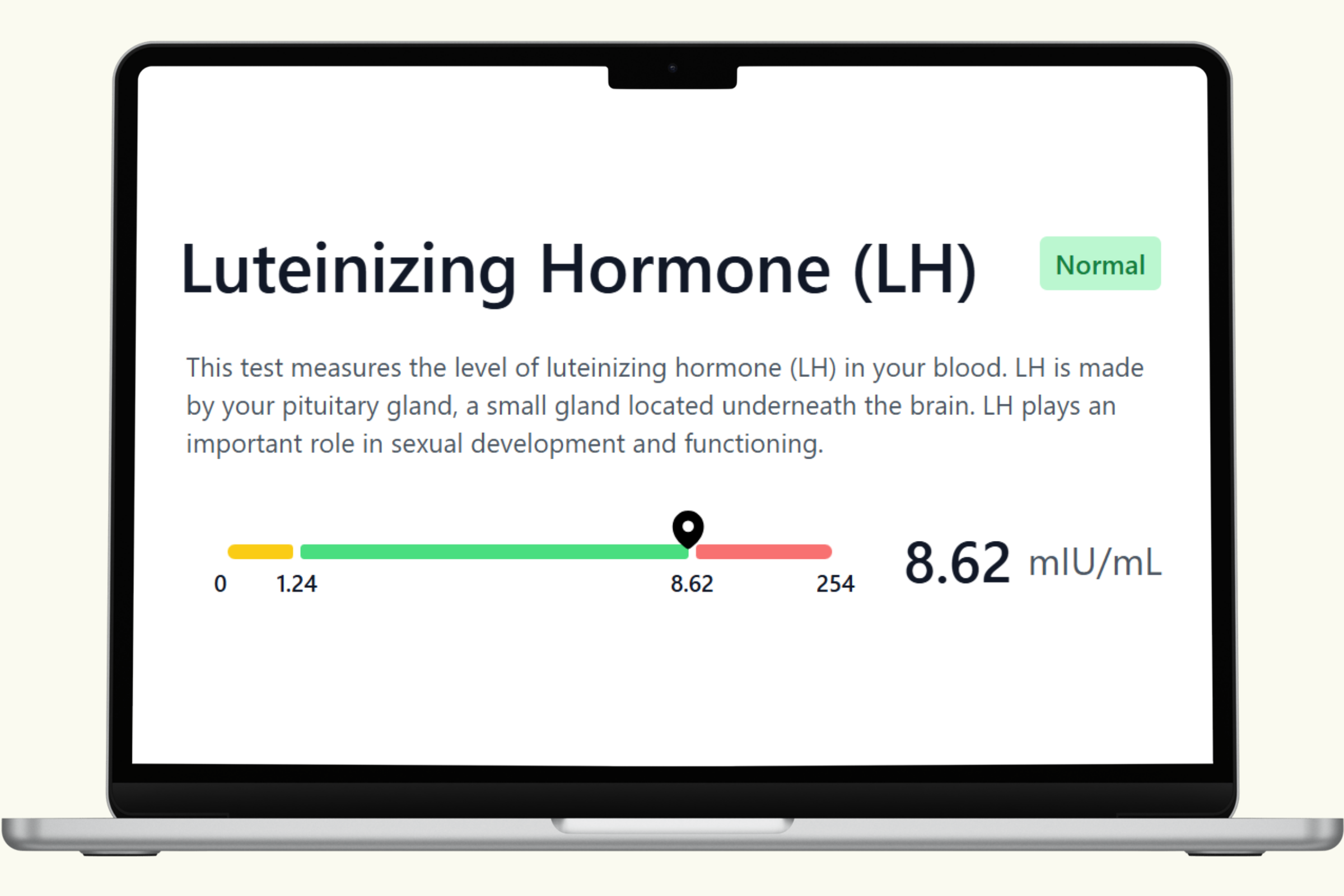
Standard (conventional) range: 1.24 – 7.8 IU/L
-
Functional/optimal range: 3.0 – 6.0 IU/L
Values outside of these ranges may indicate an imbalance in testosterone production or potential dysfunction in the hypothalamic-pituitary-gonadal axis.
What High LH Can Mean
Elevated LH in men often points to reduced testicular function, since the pituitary increases LH production in an attempt to stimulate testosterone. Common causes include:
- Primary testicular failure
- Genetic conditions such as Klinefelter syndrome
- Testicular injury or infection
- Radiation or chemotherapy exposure
- Aging and gradual testicular decline
High LH with low testosterone is often a sign of primary hypogonadism, where the testes cannot produce sufficient testosterone despite strong stimulation from LH.
What Low LH Can Mean
Low LH may indicate that the pituitary or hypothalamus is not signaling properly, leading to secondary hypogonadism. Possible causes include:
- Pituitary or hypothalamic tumors
- Chronic illness or stress
- Obesity and insulin resistance
- Excessive use of anabolic steroids or exogenous testosterone
- Medication side effects (such as opioids or glucocorticoids)
Low LH leads to inadequate testosterone production, which can cause fatigue, loss of muscle, decreased bone density, infertility, and reduced quality of life.
Why You Should Get Your LH Checked
Understanding your LH levels provides essential context for your reproductive and overall health. When measured alongside testosterone and other hormones, LH testing helps to:
- Identify whether low testosterone is due to testicular or pituitary dysfunction
- Guide treatment decisions such as testosterone replacement therapy (TRT)
- Detect early signs of infertility or suboptimal sperm production
- Support proactive health monitoring and prevention of long-term complications
With the PlexusDx Men’s Health & Wellness Blood Test, you can easily measure LH and other critical hormones using a convenient at-home dried blood spot collection. This gives you reliable information to share with your healthcare provider and empowers you to take control of your hormonal health.
Conclusion
The Luteinizing Hormone (LH) Blood Test is a powerful tool for understanding male reproductive and hormonal health. As the key regulator of testosterone production, LH provides insight into fertility, vitality, and the function of the hypothalamic-pituitary-gonadal axis. Both high and low LH levels can signal underlying health concerns, making regular testing an important part of proactive men’s health care.
The PlexusDx Men’s Health & Wellness Blood Test offers a simple, accurate, and accessible way to check LH levels at home, giving you the knowledge you need to maintain balance and optimize your long-term health.
Medical and Editorial Standards
Sources and evidence: PlexusDx educational content is developed using peer-reviewed research, clinical literature, reputable medical references, and, where applicable, public health or regulatory guidance. References are included at the end of the article when scientific, medical, or health-related claims are discussed.
Commercial transparency: PlexusDx offers genetic testing, blood biomarker testing, personalized supplement recommendations, and related precision wellness services. Product mentions are intended to help readers understand available options and should not be interpreted as medical advice.
Important disclaimer: PlexusDx educational content is for informational purposes only and should not be used as a substitute for professional medical advice, diagnosis, or treatment. Always consult a qualified healthcare provider before making decisions about medications, supplements, genetic testing, lab testing, or health-related care.


Share:
Estradiol (E2) Blood Test
Free Testosterone Blood Test