Last updated: May 12, 2026
Written by:
Jay Hastings
,
CEO of PlexusDx
Jay Hastings is the CEO of PlexusDx, a precision health company focused on genetic testing, blood biomarker insights, and personalized wellness recommendations. He has more than 20 years of experience across healthcare innovation, genomics, laboratory operations, healthcare investing, and strategic finance. His work has included scaling healthcare startups, leading CLIA lab integrations, and helping expand consumer access to precision health tools.
Free Testosterone Blood Test: The Active Form of Testosterone in Men
Testosterone is the primary male sex hormone, but not all testosterone circulating in the blood is available for use.
Most of it is bound to proteins such as sex hormone-binding globulin (SHBG) and albumin, leaving only a small fraction
unbound. This unbound portion is called free testosterone, and it represents just 2 to 3 percent of
total testosterone levels. Despite being a small percentage, free testosterone is the biologically active form that
binds to receptors in tissues and drives critical male functions.
The Free Testosterone Blood Test, included in the PlexusDx Men’s Health & Wellness Blood Test,
measures this active portion. The test is performed through a simple at-home dried blood spot collection using an ADX card,
giving men a convenient way to check hormone balance without a clinic visit.
What is Free Testosterone?
In men, testosterone is produced mainly by the testes in response to luteinizing hormone (LH) released from
the pituitary gland. While total testosterone measures all testosterone in circulation, free testosterone reflects
only the unbound form that directly influences body tissues. Because free testosterone is what interacts with
receptors in cells, it is often a better indicator of hormonal activity than total testosterone alone.
Why Free Testosterone Matters for Men
1. Bone Density and Strength
Adequate free testosterone helps maintain strong bones by stimulating bone formation and reducing breakdown. Low levels are
associated with higher risk of osteoporosis and fractures in men.
2. Muscle Mass and Physical Performance
Free testosterone drives protein synthesis, supporting muscle growth, repair, and strength. Men with low free testosterone
often notice decreased muscle mass, slower recovery from exercise, and reduced stamina.
3. Red Blood Cell Production
Testosterone supports the production of red blood cells in the bone marrow, which carry oxygen throughout the body. Low
free testosterone can contribute to anemia, fatigue, and reduced endurance.
4. Libido and Sexual Function
Free testosterone plays a central role in maintaining sex drive and erectile function. Low levels often result in reduced
libido, erectile dysfunction, or difficulty with sexual satisfaction.
5. Sperm Production and Fertility
Along with follicle-stimulating hormone (FSH), testosterone is critical for sperm development. Without adequate free
testosterone, fertility can decline due to reduced sperm count and quality.
6. Mood and Brain Health
Testosterone influences neurotransmitters that regulate mood, focus, and memory. Low free testosterone has been linked to
depression, irritability, brain fog, and reduced motivation.
7. Aging and Andropause
Free testosterone levels peak in a man’s late 20s and gradually decline with age. This decline contributes to
andropause symptoms such as fatigue, decreased energy, weight gain, and diminished sexual performance. Monitoring free
testosterone helps identify whether these symptoms are due to normal aging or a more significant imbalance.
How Free Testosterone is Measured
Free testosterone is measured directly or calculated from total testosterone and SHBG levels. Because it represents a small
fraction of total testosterone, precise measurement is important. The PlexusDx Men’s Health & Wellness Blood Test measures
free testosterone in a dried blood spot sample, providing an accurate and convenient method for at-home hormone testing.
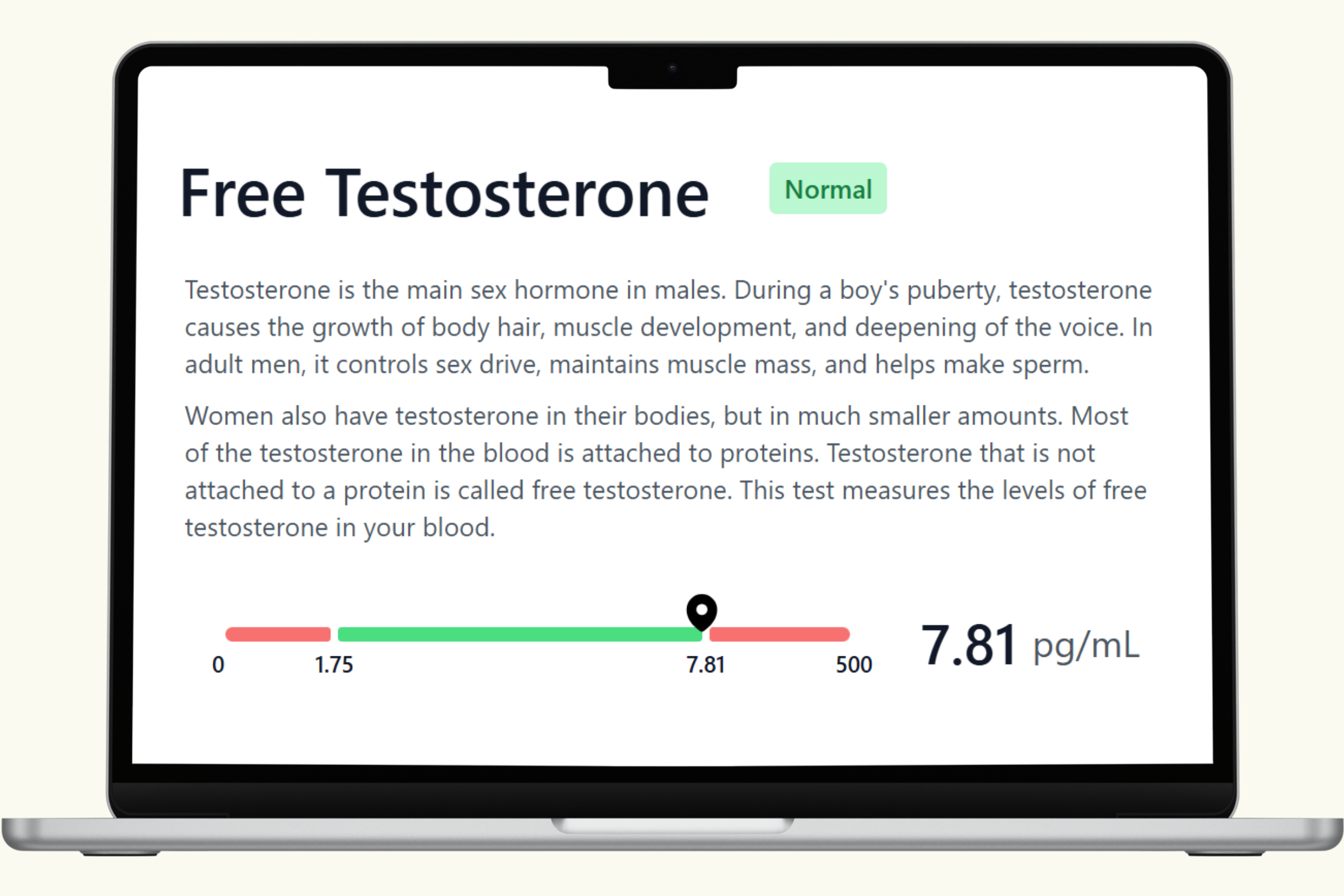
Reference Ranges for Free Testosterone in Men
Reference values may vary by laboratory, but commonly reported ranges for adult men include:
-
Standard (conventional) range: 5 – 21 ng/dL
-
Functional/optimal range: 10 – 20 ng/dL
Levels outside these ranges may indicate hormone imbalance, even if total testosterone levels appear normal.
What Low Free Testosterone Can Mean
Low free testosterone may be due to reduced total testosterone or excessive binding by SHBG. Causes include:
- Aging and natural decline
- Obesity and insulin resistance
- Chronic illness or stress
- Pituitary or testicular dysfunction
- Medication side effects (opioids, steroids, certain antidepressants)
Symptoms of low free testosterone include low libido, erectile dysfunction, fatigue, mood changes, muscle loss, and
difficulty concentrating. Research also links low free testosterone to higher cardiovascular risk, making it an important
marker for long-term health.
What High Free Testosterone Can Mean
High free testosterone is less common but can result from:
- Overuse of testosterone replacement therapy (TRT)
- Low SHBG levels due to obesity, hypothyroidism, or insulin resistance
- Adrenal or testicular tumors (rare)
Elevated free testosterone can lead to acne, increased aggression, sleep apnea, and potential cardiovascular strain.
Monitoring levels ensures testosterone is maintained in a safe and healthy range.
Why You Should Get Your Free Testosterone Checked
Free testosterone is one of the most accurate indicators of male hormonal health. Measuring it alongside total testosterone
and other hormones provides a complete picture of testosterone activity. Understanding your levels can help:
- Identify hidden causes of fatigue, low libido, or mood changes
- Optimize testosterone replacement therapy
- Detect early signs of andropause or age-related decline
- Support fertility planning and reproductive health
- Evaluate cardiovascular and metabolic risks
With the PlexusDx Men’s Health & Wellness Blood Test, measuring free testosterone is simple and
accurate. The at-home dried blood spot method provides meaningful insights you can share with your healthcare provider.
Conclusion
Free testosterone represents the biologically active form of testosterone and is essential for male vitality, fertility,
bone health, and overall quality of life. Because levels decline with age and can be affected by lifestyle and health
conditions, regular monitoring is key to maintaining balance. Both low and high free testosterone can signal health
concerns, making this biomarker an important part of a comprehensive men’s health assessment.
The PlexusDx Men’s Health & Wellness Blood Test makes it easy to track free testosterone at home, empowering men to take
control of their health and make informed decisions about long-term wellness.
Medical and Editorial Standards
Sources and evidence: PlexusDx educational content is developed using peer-reviewed research, clinical literature, reputable medical references, and, where applicable, public health or regulatory guidance. References are included at the end of the article when scientific, medical, or health-related claims are discussed.
Commercial transparency: PlexusDx offers genetic testing, blood biomarker testing, personalized supplement recommendations, and related precision wellness services. Product mentions are intended to help readers understand available options and should not be interpreted as medical advice.
Important disclaimer: PlexusDx educational content is for informational purposes only and should not be used as a substitute for professional medical advice, diagnosis, or treatment. Always consult a qualified healthcare provider before making decisions about medications, supplements, genetic testing, lab testing, or health-related care.


Share:
Luteinizing Hormone (LH) Blood Test
Testosterone Blood Test