Last reviewed: June 30, 2026
Last updated: June 30, 2026
Written by:
Jay Hastings,
CEO of PlexusDx
Jay Hastings is the CEO of PlexusDx, a precision health company focused on genetic testing, blood biomarker insights, and personalized wellness recommendations. He has more than 20 years of experience across healthcare innovation, genomics, laboratory operations, healthcare investing, and strategic finance.
Medically reviewed by:
Jayden Lee, PharmD, EMBA
Jayden Lee, PharmD, EMBA, is the PlexusDx Medical Science Liaison with a PharmD and MBA specializing in pharmacogenomics and clinical product development, with a proven ability to bridge the gap between genomic research and practical patient outcomes. Dr. Lee has more than 10 years of professional experience in clinical pharmacy, academia, and research.
This article is part of the PlexusDx Education Hub — science-backed guidance on GLP-1 medications, metabolic health, and precision weight management.
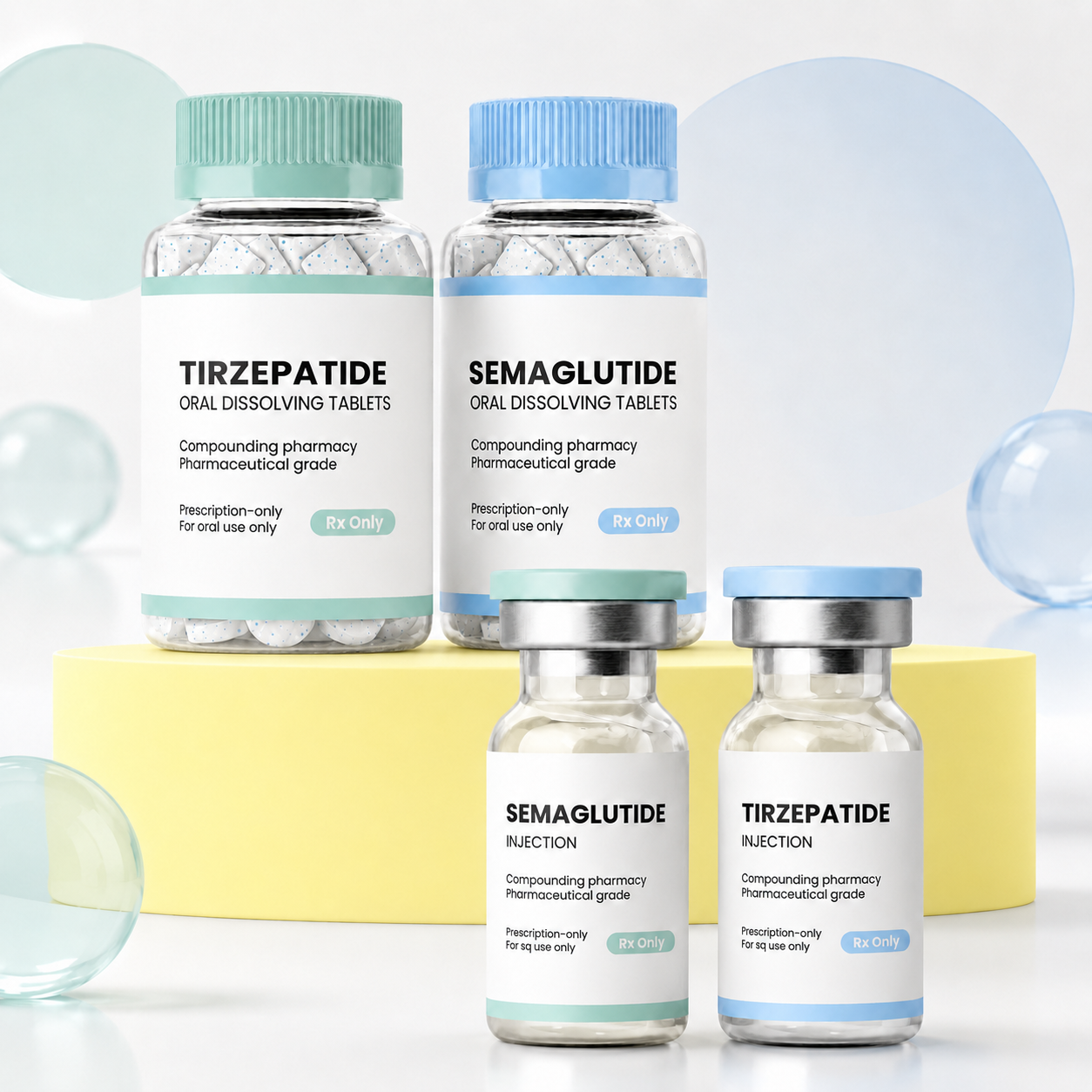
Compounded semaglutide and tirzepatide may be offered in different forms, including weekly injections and daily oral dissolving tablets, often called ODTs. Both options are designed to support appetite control, food noise reduction, and metabolic weight management, but they differ in how they are taken, how consistently patients use them, how they fit into daily life, and how providers think about dose strategy.
The simplest difference is this: weekly GLP-1 injections are typically chosen for patients who want a more traditional, structured, once-weekly treatment routine, while daily GLP-1 ODTs may appeal to patients who prefer to avoid injections and want a needle-free option that fits into a daily habit.
Start your GLP-1 program with PlexusDx
One all-inclusive price covers your online provider visit, prescription, compounded medication, and shipping — no membership, no hidden fees. Complete a short intake and a licensed provider takes it from there.
Start your intake →
Weekly Injection vs Daily ODT: The Simple Difference
A weekly injection is taken once per week, usually under the skin. This route is familiar to patients who have used GLP-1 medications like semaglutide or tirzepatide before. It can be convenient because it only requires remembering one treatment day each week. For many patients, that simplicity supports consistency.
A daily ODT is taken by mouth, usually as a dissolving tablet. This may be appealing for patients who dislike needles, feel anxious about injections, travel frequently, or want a medication routine that feels similar to taking a daily supplement or tablet. The tradeoff is that daily use requires stronger routine-building and more attention to timing and consistency.
| Option |
How It’s Taken |
Best For |
Main Tradeoff |
| Semaglutide Weekly Injection |
Once-weekly subcutaneous injection |
Patients who want a structured weekly routine and GLP-1-only pathway |
Requires comfort with injections |
| Tirzepatide Weekly Injection |
Once-weekly subcutaneous injection |
Patients seeking a stronger dual GLP-1/GIP pathway |
Requires comfort with injections and careful dose escalation |
| Semaglutide Daily ODT |
Daily oral dissolving tablet |
Patients who prefer a needle-free GLP-1 option |
Requires daily consistency and proper use instructions |
| Tirzepatide Daily ODT |
Daily oral dissolving tablet |
Patients who want a needle-free dual-pathway option |
Requires daily consistency and provider-guided expectations |
What Is a Weekly GLP-1 Injection?
A weekly GLP-1 injection is a medication taken once per week under the skin, commonly in areas such as the abdomen, thigh, or upper arm when instructed by a provider. This route is widely associated with GLP-1 weight management because FDA-approved injectable semaglutide and tirzepatide products are taken once weekly.
For many patients, the weekly schedule is one of the biggest advantages. Instead of remembering a medication every morning, the patient picks one consistent day each week and stays on that routine. This can be especially helpful for busy patients, frequent travelers, or anyone who struggles with daily medication adherence.
Weekly injections are also commonly used in structured titration plans. A patient may start at a low dose and increase gradually under provider guidance. This step-up approach helps balance appetite suppression, weight loss progress, and tolerability.
What Is a Daily GLP-1 ODT?
A daily GLP-1 ODT is an oral dissolving tablet designed to dissolve in the mouth. For patients who are anxious about injections or strongly prefer a needle-free experience, an ODT can feel more approachable than a weekly shot.
The biggest benefit is convenience for patients who dislike needles. The biggest responsibility is consistency. Because ODTs are taken daily, they require a reliable routine. Missing several days can reduce consistency and make it harder to evaluate whether the protocol is working.
Daily ODTs should not be treated as interchangeable with injectable GLP-1 medications. Oral and injectable routes can behave differently, and compounded ODTs are not the same as FDA-approved injectable medications or FDA-approved oral semaglutide tablets. Patients should follow the exact instructions provided by their PlexusDx care team and should not change dose, timing, or route without provider guidance.
Which Is More Effective: Weekly Injection or Daily ODT?
For many patients, weekly injections are generally considered the more traditional and evidence-supported route for GLP-1 weight management. Injectable semaglutide and tirzepatide have been extensively studied in large clinical weight loss programs, and the once-weekly schedule is well established.
Daily ODTs may still be useful for selected patients, especially when needle avoidance is the primary barrier to starting treatment. In practical terms, the best medication is often the one the patient can take consistently. A patient who refuses injections but will reliably take a daily ODT may do better with the ODT than with an injectable plan they never start.
That said, expectations should be clear. If the goal is stronger, more predictable weight loss, a weekly injection may be the better fit. If the goal is a needle-free option with daily habit-building and a gentler entry point, an ODT may be worth discussing.
Semaglutide Injection vs Semaglutide ODT
Semaglutide primarily works through the GLP-1 receptor pathway, helping support satiety, appetite regulation, food noise reduction, and glucose-related signaling. A weekly semaglutide injection may be a good option for patients who want a traditional GLP-1 treatment path with a once-weekly routine.
Semaglutide ODT may appeal to patients who want the same general medication category but prefer to avoid needles. This can be especially relevant for people who delay treatment because they are uncomfortable with injections. A daily ODT may help remove that barrier.
The tradeoff is routine. A weekly injection requires one scheduled treatment day. A daily ODT requires remembering the medication every day and following the care team’s instructions consistently. Patients who already have a strong morning routine may find that easy. Patients who frequently forget daily medications may do better with weekly injections.
Tirzepatide Injection vs Tirzepatide ODT
Tirzepatide works through both GLP-1 and GIP receptor pathways. This dual-pathway activity is one reason tirzepatide is often discussed as a stronger option for weight management. A weekly tirzepatide injection may be a good fit for patients seeking more robust appetite and metabolic support.
Tirzepatide ODT may appeal to patients who are interested in tirzepatide’s dual-pathway profile but prefer a needle-free route. This option may be especially attractive for patients who are motivated to start treatment but feel blocked by the idea of self-injection.
Because tirzepatide can be potent, even route and dose strategy should be discussed carefully with a provider. Patients should understand the expected pace of results, possible side effects, and the importance of not adjusting dose without medical guidance.
Adherence: Once Weekly vs Every Day
Adherence is one of the most important differences between injections and ODTs. A weekly injection can simplify adherence because the patient only has to remember one treatment event each week. Many patients choose a specific day, such as Sunday evening or Monday morning, and build the injection into their routine.
A daily ODT requires a different type of consistency. For some people, daily medication is easy because it becomes part of brushing teeth, taking vitamins, or making coffee. For others, daily dosing creates more opportunities to miss doses. Before choosing an ODT, it is worth asking: Am I more likely to stay consistent with one weekly treatment or one daily habit?
Needle Anxiety: When ODT May Make Sense
Needle anxiety is real. Some patients are comfortable with the idea of GLP-1 treatment but hesitate when they learn it may involve injections. For those patients, an ODT can make treatment feel more accessible.
However, injection anxiety should also be put in context. Weekly GLP-1 injections use small subcutaneous needles, and many patients find them easier than expected after the first dose. For patients who want the stronger evidence base and convenience of weekly treatment, learning proper injection technique may be worthwhile.
If needle fear is the main reason you are considering an ODT, discuss that concern during your intake. Your care team can help you weigh comfort, expected results, and long-term consistency.
Side Effects: Does the Route Change Tolerability?
Both weekly injections and daily ODTs can cause GLP-1-related side effects. Common issues may include nausea, constipation, diarrhea, reflux, bloating, reduced appetite, or fatigue. These effects often appear early in treatment or after dose changes.
Some patients may tolerate one route better than another, but route alone does not eliminate side effect risk. Dose, escalation speed, hydration, food choices, protein intake, bowel regularity, and individual biology all matter. Patients should follow provider guidance closely and report persistent or severe side effects.
Because compounded GLP-1 products can vary in concentration, instructions, and format, dosing clarity is especially important. Patients should never guess, estimate, or modify their dose without direct instructions from their care team.
How Your Genetics May Influence GLP-1 Response
Not every person responds to GLP-1 medications the same way. Genetic differences can influence appetite regulation, satiety signaling, insulin response, metabolic flexibility, and side effect sensitivity. This may help explain why one patient does well with a lower-dose oral option while another needs a structured weekly injection protocol to see meaningful progress.
PlexusDx offers the Precision Peptide Genetic Test, which analyzes peptide and metabolic pathway insights that may help personalize medication choice, dose strategy, and lifestyle support. For patients deciding between semaglutide and tirzepatide — or between weekly injection and daily ODT — genetic insight can add another layer of personalization.
Genetics should not replace provider judgment, but it can help inform a more personalized plan. The best protocol is one that matches your goals, your biology, your tolerance profile, and your ability to stay consistent.
How PlexusDx Helps You Choose the Right GLP-1 Format
PlexusDx offers GLP-1 options designed to meet patients where they are. Some patients want the structure and convenience of a once-weekly injection. Others want a needle-free ODT because avoiding injections is the difference between starting treatment and delaying it.
During the intake process, you will select a preferred GLP-1 option. Your selection helps guide the provider review. After submission, a licensed provider reviews your information and may adjust or recommend a different medication, route, or protocol if clinically appropriate.
For patients focused on stronger, more traditional weight loss support, weekly semaglutide or tirzepatide injections may be the better fit. For patients who strongly prefer a needle-free approach, daily semaglutide or tirzepatide ODTs may be worth considering. Either way, the goal is to help you choose a plan you can follow consistently.
PlexusDx GLP-1 protocols start at $129/month with no membership fees or hidden charges. Pricing is designed to be straightforward, with provider review, prescription management, medication, supplies when applicable, shipping, and ongoing monitoring included where available and clinically appropriate.
Frequently Asked Questions
What is the main difference between weekly GLP-1 injections and daily ODTs?
Weekly GLP-1 injections are taken once per week under the skin, while daily ODTs are oral dissolving tablets taken every day. Injections are usually better for patients who want a structured once-weekly routine. ODTs may be better for patients who strongly prefer a needle-free option.
Is a weekly semaglutide injection stronger than semaglutide ODT?
Weekly semaglutide injections are the more traditional and evidence-supported route for GLP-1 weight management. Semaglutide ODT may be useful for patients who prefer a needle-free option, but it should not be assumed to be identical to injectable semaglutide. Your provider can help determine which route is more appropriate for your goals and medical history.
Is tirzepatide available as a daily ODT?
Some compounded programs may offer tirzepatide in oral dissolving tablet form when legally available and clinically appropriate. However, compounded tirzepatide ODT is not the same as FDA-approved injectable tirzepatide products. Patients should follow provider instructions carefully and understand that compounded products are not FDA-approved drug products.
Which option is better if I hate needles?
A daily ODT may be a better fit if needle anxiety is your biggest barrier to starting GLP-1 treatment. However, many patients find weekly injections easier than expected once they learn proper technique. If you are nervous about injections, share that during the intake process so your care team can help guide your choice.
Which option is better if I forget daily medications?
A weekly injection may be better if you struggle to remember daily medications. Since it is taken once per week, it can be easier to build into a simple routine. Daily ODTs require consistent daily use, so they work best for patients who already have reliable daily habits.
Do ODTs cause fewer side effects than injections?
Not necessarily. Both ODTs and injections can cause GLP-1-related side effects such as nausea, constipation, reflux, bloating, diarrhea, reduced appetite, or fatigue. Tolerability depends on the medication, dose, escalation schedule, individual biology, and how consistently you follow provider instructions.
Can I switch from ODT to weekly injection later?
In many cases, a provider may consider changing the route or protocol if clinically appropriate. Some patients may start with an ODT because they are hesitant about injections and later switch to a weekly injection for stronger or simpler treatment. Do not switch routes or adjust dosing without provider approval.
Can I choose injection or ODT during the PlexusDx intake?
Yes. The PlexusDx intake process asks you to choose a GLP-1 preference before submission, including route and medication options where available. Your selection helps guide provider review. After submission, the licensed provider can adjust or recommend a different medication, route, or protocol if clinically appropriate.
Are compounded GLP-1 ODTs FDA-approved?
No. Compounded GLP-1 ODTs are not FDA-approved drug products. Compounded medications may be prepared by licensed compounding pharmacies when legally available and clinically appropriate, but they are not the same as FDA-approved products such as Wegovy, Ozempic, Zepbound, Mounjaro, or Rybelsus.
Does PlexusDx require insurance or a membership fee?
No. PlexusDx GLP-1 protocols do not require insurance or a membership fee. Pricing starts at $129/month, and program details may vary by medication, route, protocol, availability, and provider approval.
Related Reading
Pricing and availability current as of June 2026. Availability of compounded semaglutide and tirzepatide is subject to applicable federal and state compounding rules, provider approval, and pharmacy availability. Compounded GLP-1 medications are not FDA-approved drug products; they are prepared by licensed compounding pharmacies when legally available and clinically appropriate. Compounded semaglutide and tirzepatide are not the same as Wegovy, Ozempic, Zepbound, Mounjaro, or Rybelsus. This article is for informational purposes only and does not constitute medical advice. Consult a licensed healthcare provider before starting, stopping, or changing any medication.
Return to the PlexusDx Education Hub for more evidence-based resources on GLP-1 therapy, metabolic health, and personalized weight management.
Medical and Editorial Standards
Medical review process: This article was reviewed for medical accuracy, scientific clarity, evidence alignment, and appropriate discussion of genetics, medications, supplements, biomarkers, and health-related claims.
Sources and evidence: PlexusDx educational content is developed using peer-reviewed research, clinical literature, reputable medical references, and, where applicable, public health or regulatory guidance.
Commercial transparency: PlexusDx offers genetic testing, blood biomarker testing, personalized supplement recommendations, GLP-1 weight management support, longevity protocols, and related precision wellness services. Product mentions are intended to help readers understand available options and should not be interpreted as medical advice.
Important disclaimer: PlexusDx educational content is for informational purposes only and should not be used as a substitute for professional medical advice, diagnosis, or treatment. Always consult a qualified healthcare provider before making decisions about medications, supplements, genetic testing, lab testing, or health-related care.

Share:
Standard Dose vs Microdose GLP-1: Semaglutide and Tirzepatide
Managing Your Expectations: How Fast Wegovy Works and What to Anticipate