Last reviewed: June 30, 2026
Last updated: September 17, 2026
Written by:
Jay Hastings,
CEO of PlexusDx
Jay Hastings is the CEO of PlexusDx, a precision health company focused on genetic testing, blood biomarker insights, and personalized wellness recommendations. He has more than 20 years of experience across healthcare innovation, genomics, laboratory operations, healthcare investing, and strategic finance.
Medically reviewed by:
Jayden Lee, PharmD, EMBA
Jayden Lee, PharmD, EMBA, is the PlexusDx Medical Science Liaison with a PharmD and MBA specializing in pharmacogenomics and clinical product development, with a proven ability to bridge the gap between genomic research and practical patient outcomes. Dr. Lee has more than 10 years of professional experience in clinical pharmacy, academia, and research.
This article is part of the PlexusDx Education Hub — science-backed guidance on GLP-1 medications, metabolic health, and precision weight management.
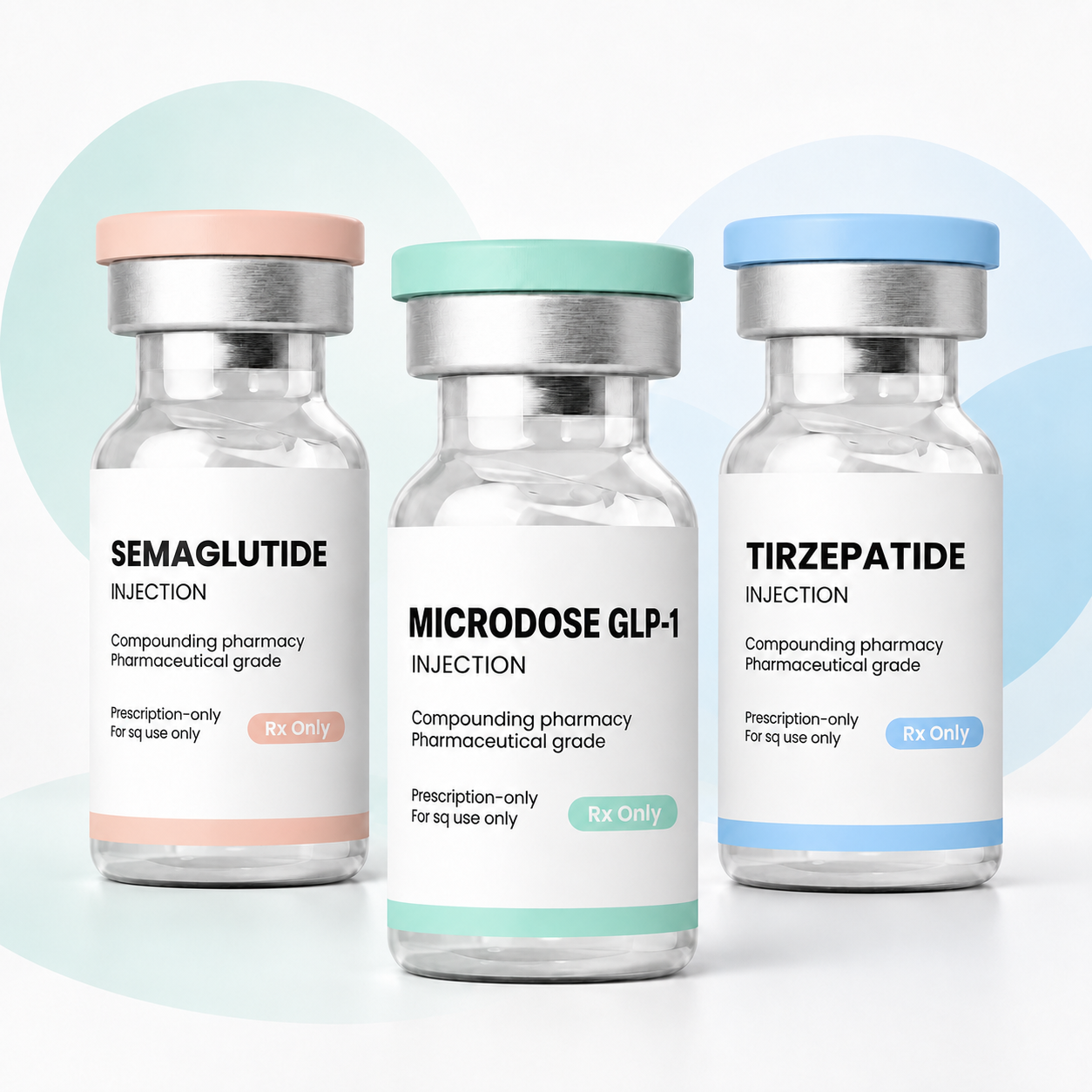
Compounded semaglutide and tirzepatide are two of the most commonly discussed GLP-1-based options for weight management. But within those medications, there is an important distinction: standard-dose protocols are designed for stronger appetite suppression and more traditional weight loss titration, while microdose protocols use lower-dose strategies intended to be gentler, more gradual, and often easier to tolerate.
The best choice depends on your goals, medication sensitivity, side effect concerns, weight loss timeline, and provider guidance. At PlexusDx, the goal is not simply to choose “the strongest” option. The goal is to match the medication, dose strategy, and pace of escalation to your biology, lifestyle, and long-term plan.
Start the Microdose GLP-1 program with PlexusDx
One all-inclusive price covers your online provider visit, prescription, compounded medication, and shipping — no membership, no hidden fees. Complete a short intake and a licensed provider reviews your fit.
Start your intake →
Standard Dose vs Microdose GLP-1: The Simple Difference
The easiest way to understand the difference is this: standard-dose semaglutide or tirzepatide is usually selected when the primary goal is meaningful weight loss, while microdose semaglutide or tirzepatide is usually selected when the goal is a gentler entry point, lower medication exposure, appetite support, craving control, or improved tolerability.
Standard-dose protocols generally follow the same overall concept used in FDA-approved GLP-1 treatment: start low, increase gradually, and adjust based on response and side effects. Microdose protocols use the same general medication category but intentionally stay at lower dose levels. That can make microdosing attractive for people who are nervous about side effects, sensitive to medications, or interested in a slower and more conservative approach.
| Protocol Type |
Best For |
Typical Goal |
Dose Strategy |
| Standard Dose Semaglutide |
Patients seeking steady weight loss with a GLP-1-only pathway |
Appetite reduction, portion control, weight loss |
Gradual titration based on response and tolerability |
| Standard Dose Tirzepatide |
Patients seeking stronger appetite and metabolic support |
More robust weight loss potential |
Gradual titration through GLP-1 and GIP pathways |
| Microdose Semaglutide |
Medication-sensitive patients or those wanting a gentler start |
Craving control, appetite support, gradual progress |
Lower-dose GLP-1 exposure with slower escalation |
| Microdose Tirzepatide |
Patients wanting a lower-dose dual-pathway option |
Gentler appetite and metabolic support |
Lower-dose GLP-1/GIP exposure with conservative titration |
What Is Standard-Dose Compounded Semaglutide?
Standard-dose compounded semaglutide is generally designed for patients who want a more traditional GLP-1 weight management protocol. Semaglutide primarily works by activating the GLP-1 receptor, which helps regulate appetite, satiety, food noise, gastric emptying, and blood sugar-related signaling. For many patients, this translates into feeling full sooner, thinking about food less often, and having more control over portion sizes.
A standard-dose semaglutide plan usually starts low and increases gradually. This step-up process matters because gastrointestinal side effects such as nausea, constipation, reflux, diarrhea, or reduced appetite can be more noticeable when the dose increases too quickly. A careful escalation schedule gives the body time to adapt while allowing the provider to adjust the pace based on how the patient is responding.
Standard-dose semaglutide may be a good fit for patients who want meaningful weight loss support, prefer a GLP-1-only pathway, are comfortable with gradual titration, and want a balance of effectiveness and tolerability. It may also appeal to patients who are newer to GLP-1 medications and want a well-established medication pathway before considering a more potent dual-action option.
What Is Standard-Dose Compounded Tirzepatide?
Standard-dose compounded tirzepatide is designed for patients who may benefit from a stronger dual-pathway approach. Tirzepatide activates both GLP-1 and GIP receptor pathways. This dual mechanism is one reason tirzepatide has shown strong results in clinical weight management research compared with GLP-1-only treatment.
Because tirzepatide can be more potent for appetite suppression and weight loss, dose selection and escalation are especially important. Starting too aggressively can increase the likelihood of side effects, while increasing too slowly may delay results for patients who need stronger metabolic support. The right pace depends on the individual’s goals, baseline appetite, prior GLP-1 experience, side effect history, and provider judgment.
Standard-dose tirzepatide may be a good fit for patients with more significant weight loss goals, stronger food cravings, prior limited response to semaglutide, or a preference for a dual GLP-1/GIP pathway. It may not be the ideal first choice for someone who is highly medication-sensitive or primarily wants a very gentle introduction to GLP-1 therapy.
What Is Microdose Semaglutide?
Microdose semaglutide uses a lower-dose GLP-1 strategy. Instead of aiming immediately toward standard therapeutic dose levels, microdosing focuses on smaller medication exposure, slower escalation, and a gentler patient experience. The goal is not necessarily the fastest possible weight loss. The goal is to support appetite, cravings, and metabolic behavior while reducing the chance that side effects interrupt treatment.
This can be especially appealing for patients who are nervous about nausea, have a history of medication sensitivity, are close to their goal weight, want help with food noise rather than aggressive weight loss, or prefer a more conservative plan. Microdose semaglutide may also be useful for patients who want to test tolerability before moving into a standard-dose pathway.
It is important to understand that microdose semaglutide is not the same as standard-dose semaglutide at a lower price point. It is a different treatment strategy. Patients choosing microdose should expect a slower, more subtle experience. Some may notice reduced cravings or better portion control before they see major scale changes.
What Is Microdose Tirzepatide?
Microdose tirzepatide applies the same lower-dose philosophy to a dual GLP-1/GIP medication pathway. This option may appeal to patients who are interested in tirzepatide’s dual-pathway profile but do not want to begin with a standard-dose approach. It can offer a more conservative entry point for patients who want appetite and metabolic support without immediately pursuing a more intensive titration schedule.
Microdose tirzepatide may be a good fit for patients who want a gentle dual-pathway option, are concerned about side effects, have previously experienced nausea on GLP-1 medications, or want gradual weight management support. Because tirzepatide can be powerful even at lower doses for some patients, careful provider oversight is still important.
As with microdose semaglutide, expectations matter. Microdose tirzepatide is usually not positioned as the fastest path to maximum weight loss. It is better understood as a lower-intensity strategy that may support appetite control, cravings, and consistency while preserving the option to adjust later if clinically appropriate.
Which Works Faster: Standard Dose or Microdose?
For most patients, standard-dose semaglutide or tirzepatide is more likely to produce faster and more noticeable weight loss because the dose strategy is designed to reach stronger appetite-suppressing levels over time. Standard-dose protocols are usually the better fit when the patient’s primary goal is significant weight reduction and they are comfortable with a more traditional titration plan.
Microdose protocols are usually slower. That does not make them ineffective; it simply means they are designed around a different goal. A microdose patient may notice less food noise, smaller portions, improved control around cravings, or better consistency before seeing dramatic scale movement. For some people, that gradual approach is exactly what makes treatment sustainable.
The right question is not only “Which one works faster?” The better question is: Which protocol gives me the best chance of staying consistent, tolerating treatment, and reaching my goal safely?
Side Effects: Why Dose Strategy Matters
GLP-1 medications can cause gastrointestinal side effects, especially during the first few weeks of treatment or after a dose increase. Common issues may include nausea, constipation, diarrhea, reflux, bloating, reduced appetite, or fatigue. These effects are often manageable, but they can become frustrating if treatment moves faster than the body can tolerate.
Standard-dose protocols may produce stronger appetite suppression, but they can also create a higher likelihood of noticeable side effects during escalation. Microdose protocols are designed to reduce that intensity by using a lower-dose approach. For patients who have tried GLP-1 medications before and stopped because of side effects, microdosing may be worth discussing with a provider.
That said, microdose does not mean “no side effects.” Any GLP-1-based medication can cause adverse effects, and some patients may still be sensitive even at lower doses. Patients should follow the exact dose instructions provided by their care team and should never adjust dose, frequency, or syringe volume without provider guidance.
Semaglutide vs Tirzepatide: How the Medication Choice Fits In
The difference between standard dose and microdose is only one part of the decision. The other part is choosing between semaglutide and tirzepatide.
Semaglutide is a GLP-1 receptor agonist. It may be a good fit for patients who want a proven GLP-1 pathway, are newer to this medication class, prefer a simpler mechanism, or want a balance between appetite support and tolerability.
Tirzepatide works through both GLP-1 and GIP pathways. It may be a better fit for patients seeking more robust weight loss potential, patients with stronger appetite signals, or patients who did not get their desired response from semaglutide.
From there, the dose strategy becomes the next layer: standard-dose semaglutide, standard-dose tirzepatide, microdose semaglutide, or microdose tirzepatide. This is why a personalized approach matters. Two patients can choose the same medication but need very different dose strategies.
Who May Be a Better Fit for Standard-Dose GLP-1?
A standard-dose semaglutide or tirzepatide protocol may be a better fit if your primary goal is significant weight loss, you have a higher starting BMI, you struggle with strong appetite or food noise, you want more noticeable appetite suppression, or you have previously tolerated GLP-1 medications well.
Standard-dose protocols may also make sense for patients who are motivated by measurable progress and want a more direct treatment path. The tradeoff is that patients need to be prepared for dose escalation, possible side effects, and the importance of hydration, protein intake, bowel regularity, and consistent follow-up.
Who May Be a Better Fit for Microdose GLP-1?
A microdose semaglutide or tirzepatide protocol may be a better fit if you are nervous about side effects, tend to be sensitive to medications, have only modest weight loss goals, want help with cravings or food noise, are near your goal weight, or prefer a slower and more conservative approach.
Microdosing may also appeal to patients who want to begin with the lowest practical medication exposure and only increase if needed. This approach can be especially helpful when long-term consistency matters more than rapid short-term weight loss.
What the Evidence Says About Microdose Tirzepatide
Microdosing is not a medical term. In the PlexusDx study it meant a total weekly dose of 1 or 2 mg of injectable tirzepatide, below the usual 2.5 mg starting dose. One published cohort now describes that dose range: the PlexusDx microdose tirzepatide study, a retrospective, single-organization observational look-back at 60 adults documented as new to GLP-1 medicines, with BMI ≥27 kg/m², who started compounded injectable tirzepatide at 1 to 2 mg a week. Mean weight loss was 2.18% in the 14–35-day window (n=57; median exposure 21 days), 3.58% in the 36–59-day window (n=19; median exposure 48 days) and 6.10% in the 60–89-day window (n=8; median exposure 65.5 days). Not everyone lost weight: 6 of 57, 2 of 19 and 0 of 8 had no loss or gained. The study has no comparison group, uses self-reported weights, is not a clinical trial, and is a preprint not yet peer reviewed (medRxiv, posted September 17, 2026). The paper’s own conclusion: “These hypothesis-generating observations support prospective comparative study, not conclusions about causality, equivalent dosing, or long-term safety.” See the PlexusDx microdose tirzepatide study (60 patients, 2026).
No equivalent published cohort exists for microdose semaglutide. And because no standard-dose group was studied, the study cannot say whether a microdose works as well as a standard dose. It describes one group; it does not settle the comparison this article is about.
How Your Genetics May Influence GLP-1 Response
Not everyone responds to GLP-1 medications the same way. Genetic differences can influence appetite regulation, satiety signaling, insulin response, metabolic flexibility, and side effect sensitivity. This helps explain why one person may respond strongly to a low dose while another person may need a more structured escalation plan to see meaningful progress.
PlexusDx offers the Precision Peptide Genetic Test, which analyzes peptide and metabolic pathway insights that may help personalize medication choice, dose strategy, and lifestyle support. For patients deciding between semaglutide and tirzepatide — or between standard dose and microdose — genetic insight can add another layer of personalization.
Genetics should not replace medical judgment, but it can help inform the conversation. The best protocol is one that matches your goals, your biology, your tolerance profile, and your provider’s clinical assessment.
How PlexusDx Helps You Choose the Right GLP-1 Protocol
PlexusDx offers standard-dose and microdose GLP-1 options designed to help patients choose a protocol that fits their goals and comfort level. During the intake process, you will select a preferred GLP-1 option. After submission, a licensed provider reviews your information and may adjust or recommend a different medication or protocol if clinically appropriate.
For patients focused on stronger weight loss, standard-dose semaglutide or tirzepatide may be the better starting point. For patients who want a more gradual and conservative experience, microdose semaglutide or tirzepatide may be a better fit. Either way, the objective is the same: help you make progress with a plan you can actually tolerate and sustain.
PlexusDx GLP-1 protocols start at $129/month with no membership fees or hidden charges. Pricing is designed to be straightforward, with provider review, prescription management, medication, supplies when applicable, shipping, and ongoing monitoring included where available and clinically appropriate.
Frequently Asked Questions
What is the main difference between standard-dose and microdose semaglutide?
Standard-dose semaglutide is generally designed for more traditional GLP-1 weight loss treatment with gradual dose escalation. Microdose semaglutide uses a lower-dose strategy intended to be gentler, slower, and potentially easier to tolerate. Standard dose is usually better for more significant weight loss goals, while microdose may be better for patients who are medication-sensitive or want a conservative starting point.
What is the main difference between standard-dose and microdose tirzepatide?
Standard-dose tirzepatide is usually selected when the patient wants stronger appetite and metabolic support through both GLP-1 and GIP pathways. Microdose tirzepatide uses a lower-dose version of that dual-pathway strategy. It may be a better fit for patients interested in tirzepatide but concerned about side effects or rapid escalation.
Does microdose GLP-1 cause fewer side effects?
Microdose GLP-1 protocols are designed to be gentler, and some patients may find them easier to tolerate. However, lower dose does not guarantee zero side effects. Nausea, constipation, reflux, appetite changes, and other GLP-1-related effects can still occur. Always follow the exact dose instructions provided by your care team.
Will I lose less weight on microdose semaglutide or tirzepatide?
Microdose protocols are generally expected to produce slower and more gradual results than standard-dose protocols. Some patients choose microdose because they prioritize tolerability, appetite control, or long-term consistency over rapid weight loss. If your goal is more significant weight reduction, standard-dose semaglutide or tirzepatide may be a better fit.
Is tirzepatide stronger than semaglutide?
Tirzepatide activates both GLP-1 and GIP pathways, while semaglutide primarily activates the GLP-1 pathway. In clinical weight loss studies, tirzepatide has generally produced greater average weight loss than semaglutide at studied therapeutic doses. However, the best choice depends on your goals, side effect history, medication sensitivity, and provider guidance.
Can I start with microdose and move to standard dose later?
In many cases, a lower-dose starting strategy can preserve the option to adjust later if clinically appropriate. Some patients may begin with microdose to assess tolerability and then discuss escalation with their provider. Do not increase your dose without provider approval.
Can I choose my GLP-1 preference during the PlexusDx intake?
Yes. The PlexusDx intake process asks you to choose a GLP-1 preference before submission. Your selection helps guide the provider review. After submission, the licensed provider can adjust or recommend a different medication or protocol if clinically appropriate based on your intake, goals, medical history, and safety considerations.
Are compounded semaglutide and tirzepatide the same as Ozempic, Wegovy, Mounjaro, or Zepbound?
No. Compounded semaglutide and tirzepatide are not the same as brand-name FDA-approved products such as Ozempic, Wegovy, Mounjaro, or Zepbound. Compounded medications are prepared by licensed compounding pharmacies when legally available and clinically appropriate, but they are not FDA-approved drug products.
Does PlexusDx require insurance or a membership fee?
No. PlexusDx GLP-1 protocols do not require insurance or a membership fee. Pricing starts at $129/month, and program details may vary by medication, route, protocol, availability, and provider approval.
Related Reading
Pricing and availability current as of June 2026. Availability of compounded semaglutide and tirzepatide is subject to applicable federal and state compounding rules, provider approval, and pharmacy availability. Compounded GLP-1 medications are not FDA-approved drug products; they are prepared by licensed compounding pharmacies when legally available and clinically appropriate. Compounded semaglutide and tirzepatide are not the same as Wegovy, Ozempic, Zepbound, or Mounjaro. This article is for informational purposes only and does not constitute medical advice. Consult a licensed healthcare provider before starting, stopping, or changing any medication.
Return to the PlexusDx Education Hub for more evidence-based resources on GLP-1 therapy, metabolic health, and personalized weight management.
Medical and Editorial Standards
Medical review process: This article was reviewed for medical accuracy, scientific clarity, evidence alignment, and appropriate discussion of genetics, medications, supplements, biomarkers, and health-related claims.
Sources and evidence: PlexusDx educational content is developed using peer-reviewed research, clinical literature, reputable medical references, and, where applicable, public health or regulatory guidance.
Commercial transparency: PlexusDx offers genetic testing, blood biomarker testing, personalized supplement recommendations, GLP-1 weight management support, longevity protocols, and related precision wellness services. Product mentions are intended to help readers understand available options and should not be interpreted as medical advice.
Important disclaimer: PlexusDx educational content is for informational purposes only and should not be used as a substitute for professional medical advice, diagnosis, or treatment. Always consult a qualified healthcare provider before making decisions about medications, supplements, genetic testing, lab testing, or health-related care.


Share:
How Soon Do You See Weight Loss with Zepbound?
Weekly GLP-1 Injection vs Daily Oral: Semaglutide and Tirzepatide