

Best Telehealth Companies for Zepbound: 2026 Pricing and Access
We compared ten telehealth platforms offering Zepbound (tirzepatide) access, evaluating all-in monthly costs, membership fees, contract terms, and service quality.
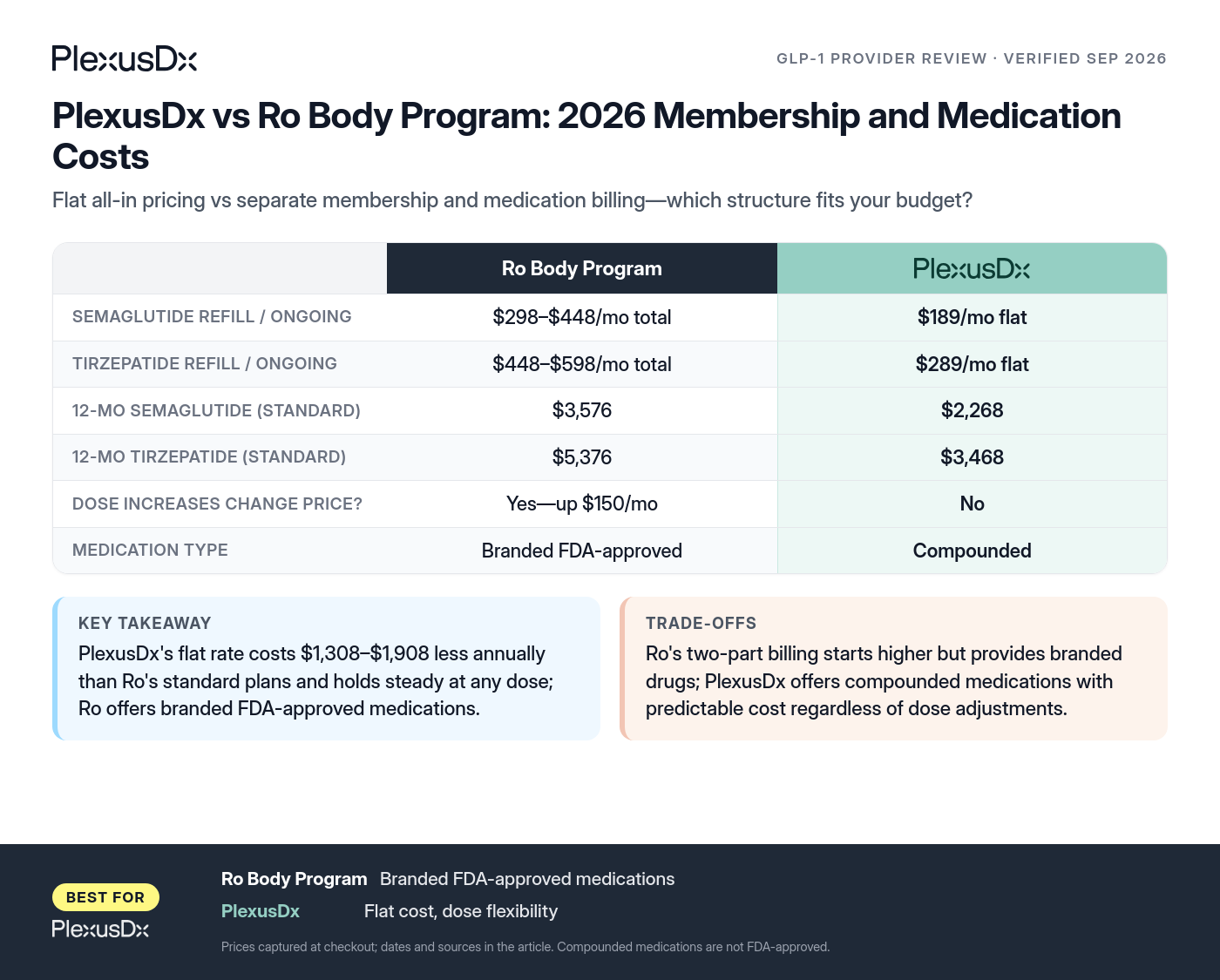
PlexusDx vs Ro Body Program: 2026 Membership and Medication Costs
Ro Body Program bills membership and medication separately, with dose-dependent pricing; PlexusDx charges one flat monthly rate. We compare the all-in 12-month cost of each structure for semaglutide and tirzepatide.

Zepbound and Your Schedule: Do You Take Zepbound on an Empty Stomach?
Zepbound timing matters for absorption and side effects. PlexusDx explains the science behind food interactions and how to optimize your injection schedule for best results.

Zepbound Before Surgery: Essential Guidance for a Safe Procedure
Tirzepatide therapy requires careful planning around surgical procedures. This guide explains timing, communication with surgeons, and post-operative management to ensure your weight loss treatment and surgical safety align perfectly.

Zepbound Storage Essentials: Can You Take Zepbound Right Out of the Fridge?
Zepbound and other tirzepatide injections require careful temperature control to maintain potency. Understanding correct storage and preparation methods ensures your medication remains effective and safe throughout your weight loss treatment.

Zepbound Dosing: How High of a Dose Does Zepbound Go?
Zepbound dosing starts low and increases gradually over 16 weeks to reach therapeutic levels. Understanding the full dose range and titration protocol helps patients and providers optimize treatment outcomes.

Zepbound Dosing Adjustment: Can You Take Your Shot 24 Hours Ahead?
Taking your tirzepatide injection a day early might seem convenient, but timing matters for steady blood levels and weight loss results. PlexusDx explains safe dosing practices and how to work with your provider on scheduling.

Zepbound Dosage: Understanding Safe Practices and Why You Can’t Take 2 x 2.5 mg to Equal 5 mg
Tirzepatide dosing requires careful medical supervision and structured escalation protocols. Doubling smaller doses does not produce the same therapeutic effect as taking a single higher dose, and attempting this can compromise safety and treatment outcomes.

Zepbound Maintenance: Can You Take It Every Other Week?
Tirzepatide maintenance therapy typically follows weekly dosing schedules established in clinical trials, though your prescriber may adjust frequency based on individual response and tolerability. PlexusDx offers compounded tirzepatide injections at $289/mo month-to-month, or from $249/mo on the 6-month plan with personalized dosing pr...

Zepbound and Thyroid Issues: A Detailed Look
GLP-1 receptor agonists including Zepbound have raised questions about thyroid safety. PlexusDx explores the current clinical evidence, medullary thyroid cancer risk factors, and how precision genetic testing helps identify individuals who may need closer monitoring.

Zepbound: Is Long-Term Use Forever? A Deep Dive into Sustainable Weight Management
Many patients wonder if tirzepatide treatment continues indefinitely or if weight loss medications can be stopped after reaching goals. Understanding the science of sustained GLP-1 therapy helps you plan realistic, long-term health outcomes.

Zepbound Dosing Decoded: The Truth About Taking Two 2.5mg Doses
Tirzepatide dosing can feel confusing when your doctor mentions multiple injections per week. PlexusDx breaks down how dose schedules work, what clinical evidence shows, and how your personalized plan fits your metabolic needs.

Zepbound Dosing: Understanding “Can I Take Zepbound Every 6 Days?” for Effective Weight Management
Zepbound dosing follows a specific weekly schedule, but many patients wonder if spacing doses differently could work. Understanding the approved dosing timeline helps maximize weight management outcomes and avoid dosing errors.

Zepbound Dosing Insights: Can I Take Two 2.5mg Zepbound Injections?
Understanding Zepbound dosing strategies helps you optimize your GLP-1 weight loss journey. PlexusDx explains tirzepatide injection protocols and how genetic testing can guide your personalized dose escalation.

Zepbound KwikPen: Demystifying How Many Doses Are in a Zepbound Pen
Zepbound pens contain multiple pre-filled doses designed for weekly injections over several weeks. Understanding your pen's dose count helps you track treatment progress and plan refills effectively.

Zepbound Dosing: Can I Take My Zepbound Shot a Day Early?
Taking your Zepbound shot one day ahead of schedule occasionally may be acceptable, but strict adherence to your prescribed dosing interval is recommended. PlexusDx provides personalized tirzepatide injection guidance based on your clinical profile.

Zepbound Dosing: Can I Take Zepbound Every Other Week for Weight Management?
Zepbound dosing flexibility allows for various schedules to support long-term weight management. Understanding tirzepatide injection timing helps you find a routine that fits your lifestyle while maintaining steady metabolic benefits.

Zepbound Dosing: Can I Take Zepbound Every 10 Days Instead of 7?
Zepbound's standard dosing follows a 7-day weekly injection schedule, but some patients wonder if spacing doses further apart is safe or effective. Understanding how tirzepatide works in your body helps clarify why timing matters for weight loss results.

Zepbound’s Lasting Impact: How Long Does a Dose of Zepbound Last?
Zepbound (tirzepatide) is administered as a once-weekly injection that remains active in your body for approximately seven days, making it a convenient option for consistent appetite suppression and metabolic support throughout the week.

Zepbound and Meal Timing: Should You Take Zepbound Before or After Eating?
Tirzepatide injection timing around meals can influence how your body responds to the medication. PlexusDx explains the science behind GLP-1 receptor agonists and optimal dosing schedules for your weight loss goals.

Zepbound Use After Gallbladder Removal: Essential Considerations
GLP-1 receptor agonists like tirzepatide can be used after gallbladder removal, but post-cholecystectomy patients need tailored monitoring for bile flow changes and gastrointestinal tolerance during weight loss therapy.

Zepbound Dosing Flexibility: Can I Take Zepbound on a Full Stomach?
Zepbound timing and food intake matter for consistent weight loss results. PlexusDx explains how stomach fullness may influence absorption and provides practical dosing strategies based on clinical evidence.

Zepbound Dosing: What Dose Are Most People On?
Zepbound dosing starts low and increases gradually over 16 weeks, with most patients reaching maintenance doses between 5mg and 15mg weekly. PlexusDx offers compounded tirzepatide injections tailored to your body's response, without dose-based pricing changes.

Zepbound and Your Body: How Long Does It Take Zepbound to Leave Your System?
Zepbound clears from your bloodstream within 4–5 days after your last injection, but metabolic effects may persist for weeks. Understanding tirzepatide elimination helps you plan treatment transitions and manage expectations.

Navigating Your Path: What Happens If I Miss a Dose of Zepbound on Your Weight Loss Journey?
Missing a single tirzepatide dose won't derail your weight loss progress, but consistency matters for optimal results. PlexusDx explains what to do and how to prevent future missed injections on your personalized GLP-1 journey.

Zepbound and Mounjaro: Can I Take Them Together?
Mixing Zepbound and Mounjaro creates serious health risks because both activate overlapping metabolic pathways. PlexusDx offers precision-matched single-agent therapy tailored to your genetic peptide response.

How Much Weight Can You Lose on 2.5 Zepbound?
A 2.5mg tirzepatide dose typically produces measurable weight loss within 4-8 weeks, with many patients losing 5-15 pounds at this starting level before dose adjustments occur. Individual results depend on metabolic factors, adherence, and genetic peptide sensitivity.

Navigating Zepbound Dosing: Can You Take a Half Dose?
Zepbound dosing requires careful medical supervision to achieve weight loss safely. PlexusDx explains tirzepatide dosing protocols, whether dose adjustments are possible, and how genetic testing helps optimize your individual treatment strategy.

Can You Lose Weight on 5mg of Zepbound?
A 5mg starting dose of tirzepatide can trigger weight loss in many patients, but individual response varies based on genetics, metabolism, and lifestyle. PlexusDx offers personalized tirzepatide therapy with dose flexibility and genetic insights to optimize results.

How Much Weight Can You Lose on Zepbound 2.5 mg?
Tirzepatide at the 2.5 mg dose represents an early step in treatment that produces measurable weight reduction for many patients, with results varying based on individual metabolism and genetic factors.
