

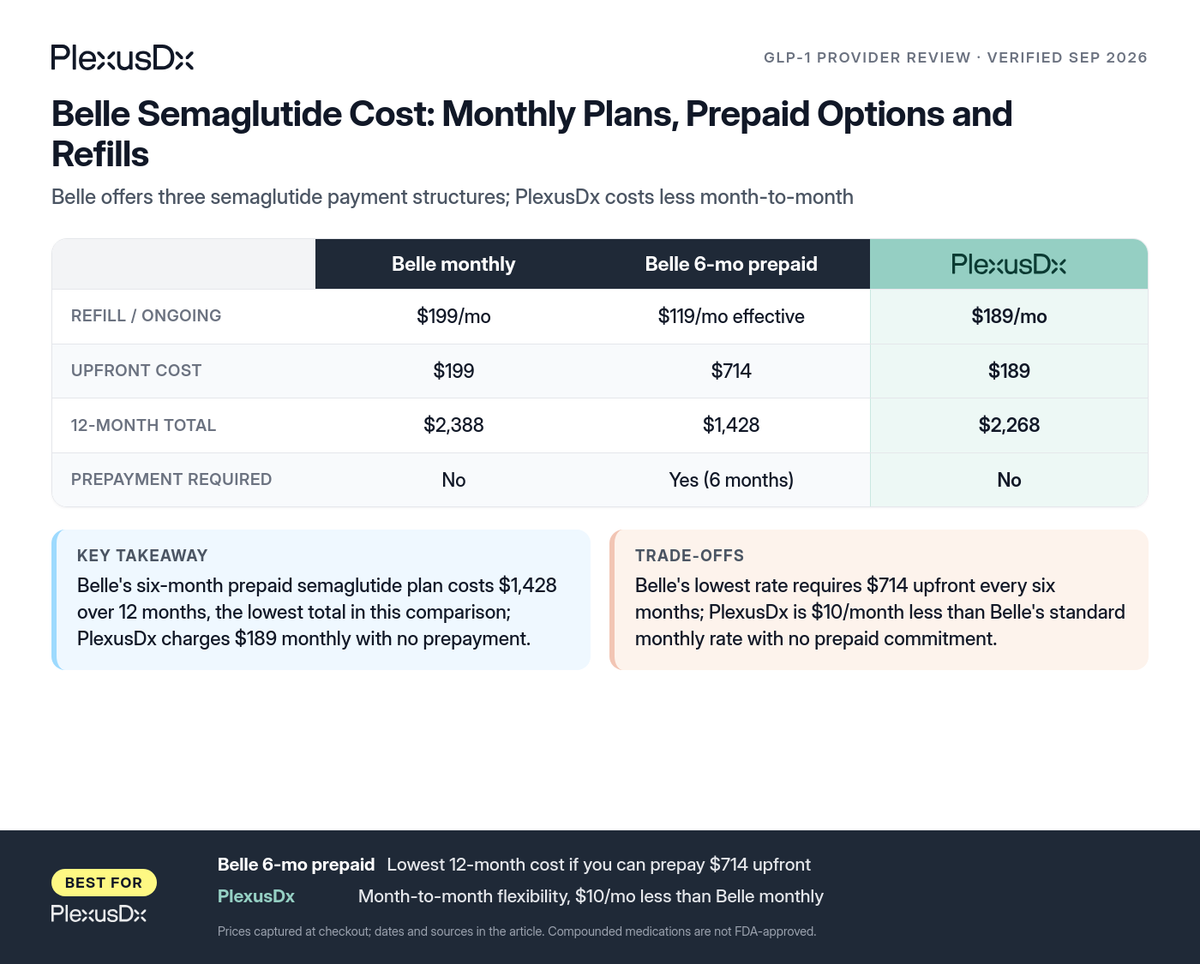
Belle Semaglutide Cost: Monthly Plans, Prepaid Options and Refills
Belle charges $199 per month for compounded semaglutide on a month-to-month plan, or $119 per month effective when six months are prepaid. This breakdown deconstructs plans, upfront costs, and 12-month totals.
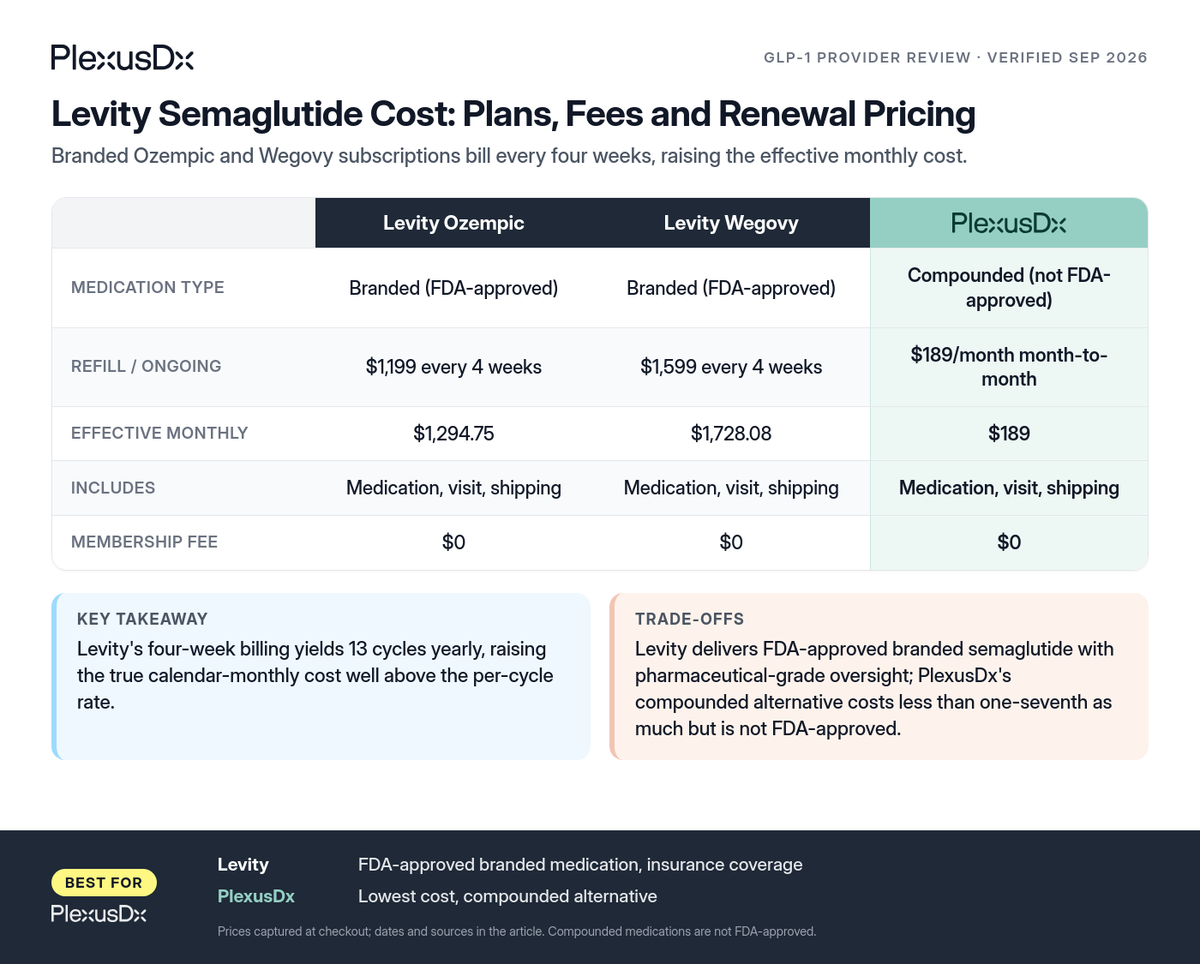
Levity Semaglutide Cost: Plans, Fees and Renewal Pricing Explained
Levity charges $1,199 every four weeks for branded Ozempic and $1,599 for Wegovy after a first-month offer. Both prices include medication, consultation, care, and shipping, with no separate membership fee.
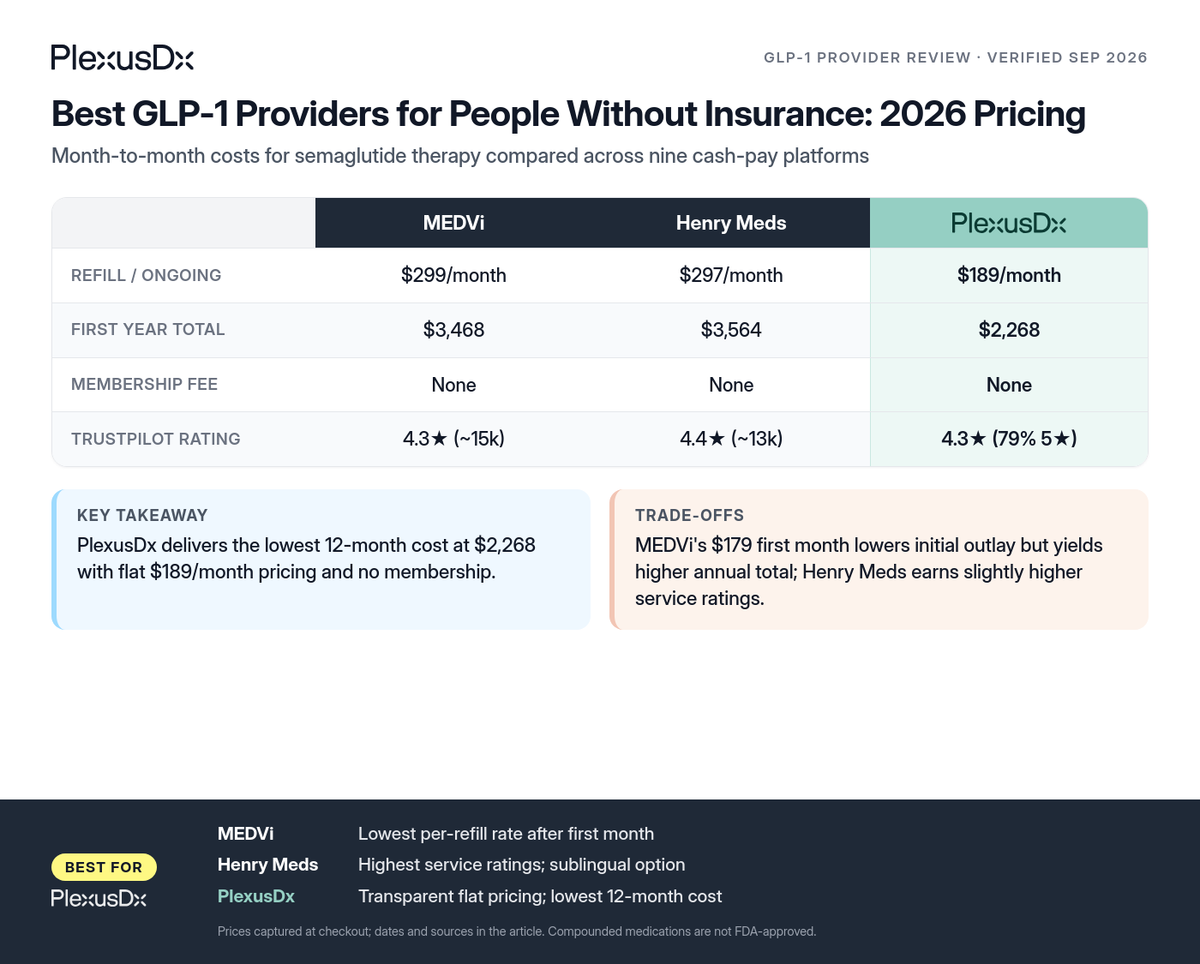
Best GLP-1 Providers for People Without Insurance: 2026 Pricing
We compared twelve telehealth GLP-1 programs on transparent pricing, month-to-month flexibility, and all-in costs for patients paying cash. PlexusDx, MEDVi, and Henry Meds lead on different priorities.
Best Month-to-Month Semaglutide Providers: 2026 Pricing Compared
Seven providers offer month-to-month compounded semaglutide under $300. We normalize first-month rates, ongoing refills, membership fees, and 12-month costs to identify the best fit for no-commitment weight management.
Cheapest Semaglutide Providers: All-In Pricing Compared for 2026
We compare 21 semaglutide providers on all-in monthly cost—medication, visits, membership, shipping. Evidence captured September 2026; prices verified at checkout where possible.
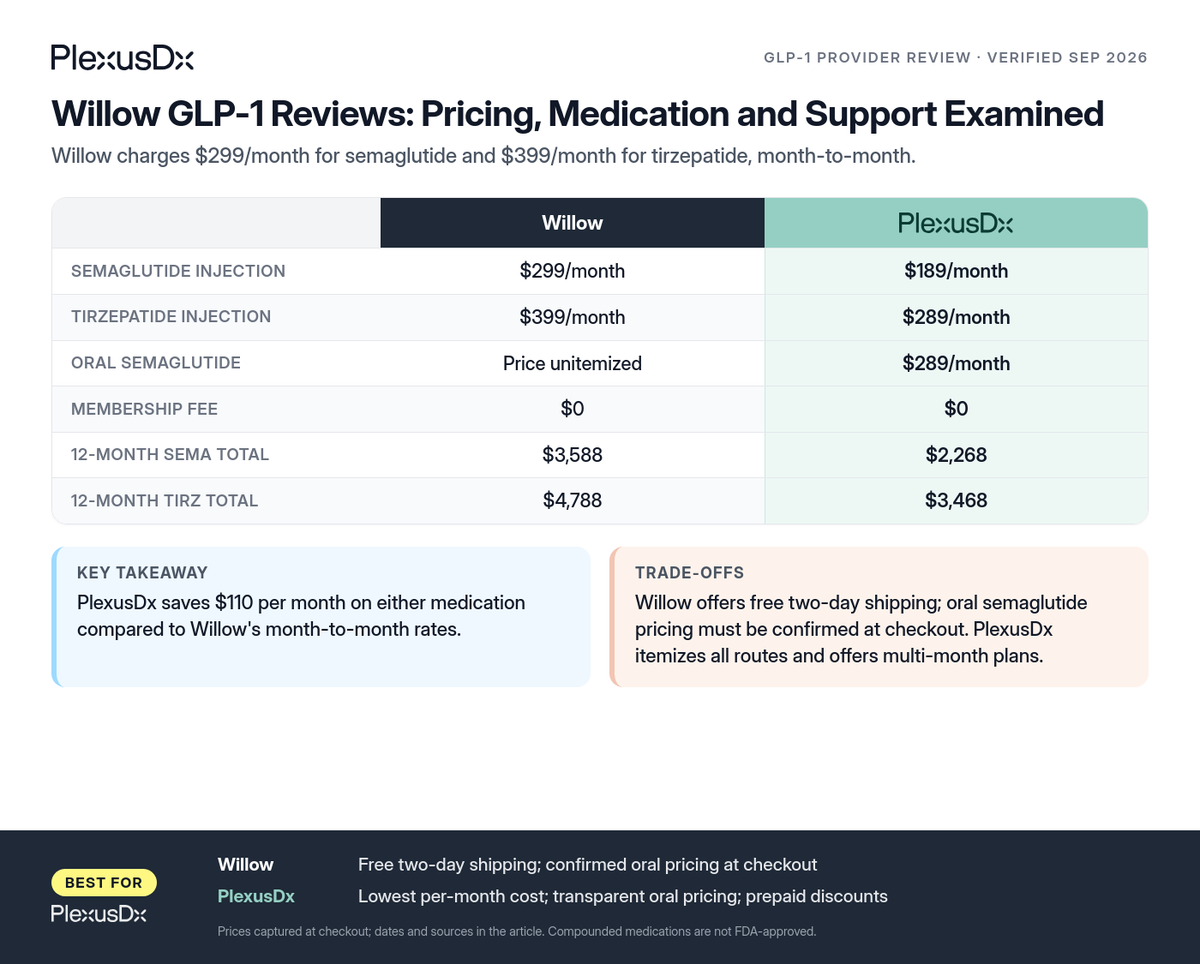
Willow GLP-1 Reviews: Pricing, Medication and Support Examined
Willow charges $299/month for compounded semaglutide and $399/month for tirzepatide. We examine pricing, medication options, and service model with verified evidence captured September 4, 2026.
Best GLP-1 Providers With No Membership Fee: 2026 Cost Comparison
Thirteen telehealth providers ship compounded semaglutide or tirzepatide with no recurring membership charge. Here's how their all-in monthly prices, prepaid discounts, and service records compare when membership fees are off the table.
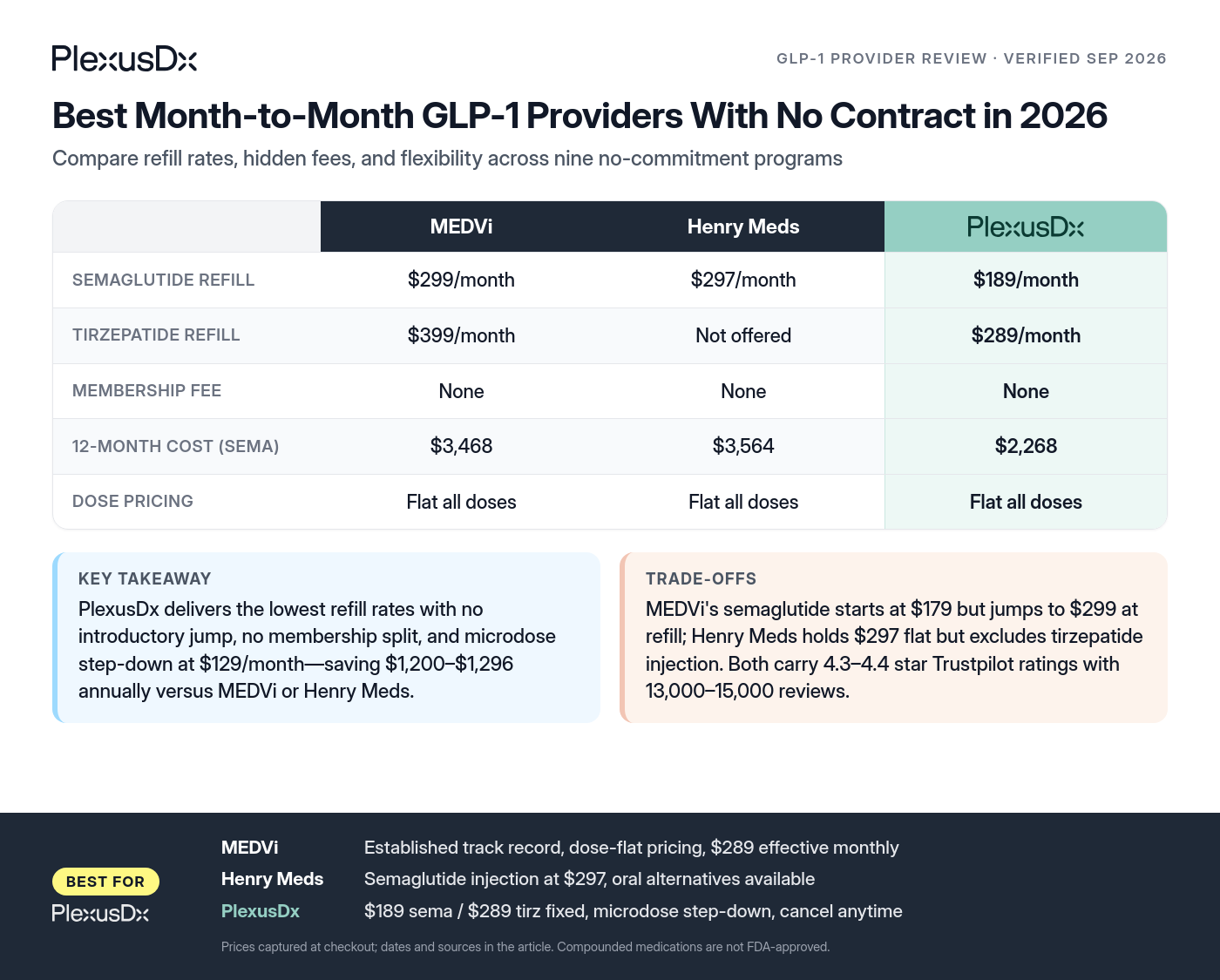
Best Month-to-Month GLP-1 Providers With No Contract in 2026
Nine providers offer true month-to-month compounded GLP-1 programs with no contract or upfront commitment—but pricing structures, first-month offers, and refill costs differ substantially.
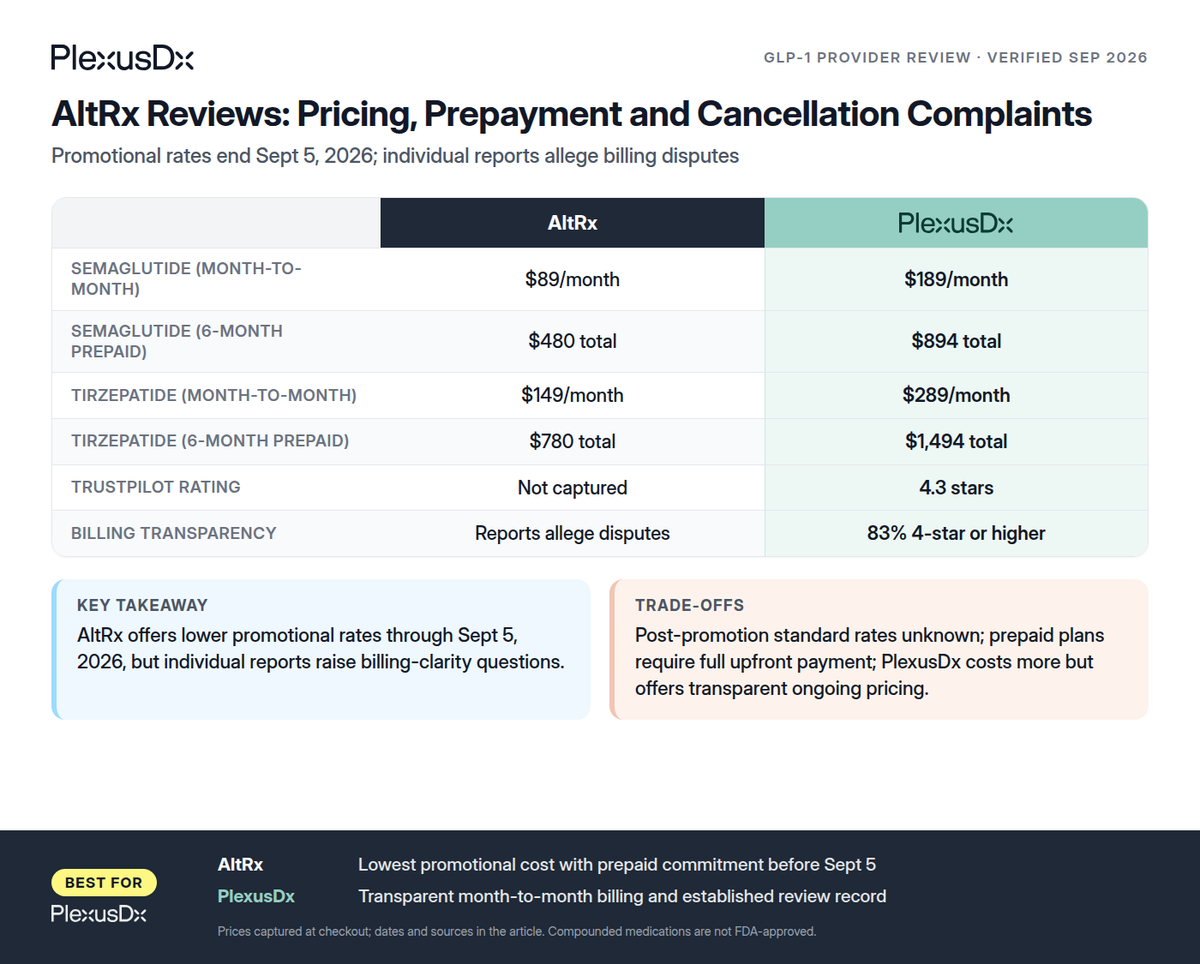
AltRx Reviews: Pricing, Prepayment and Cancellation Complaints
AltRx advertises promotional semaglutide from $75/month prepaid and "cancel anytime," but Trustpilot and Reddit users report annual prebilling disputes. We compare promotional pricing, examine cancellation complaints, and show where PlexusDx fits for transparent billing.
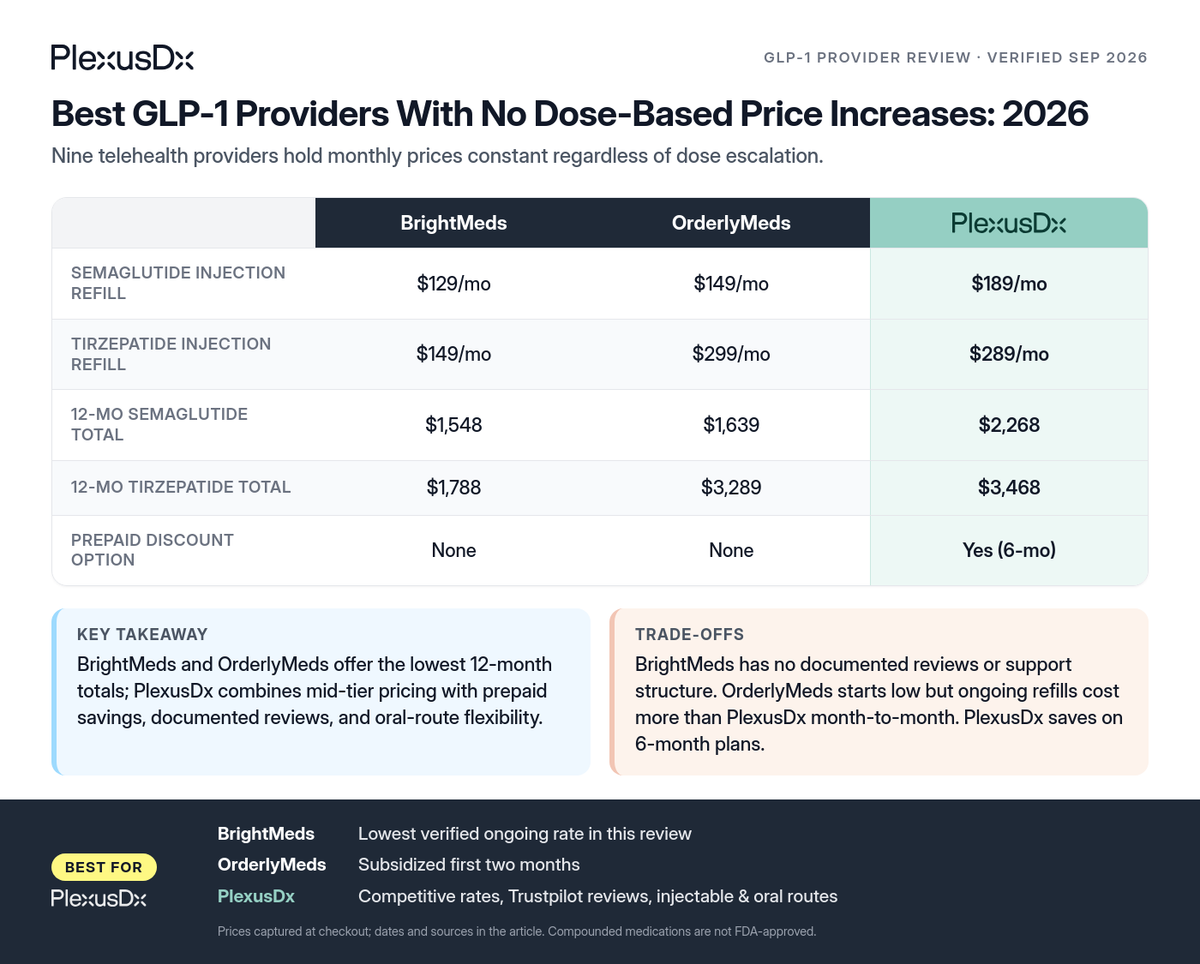
Best GLP-1 Providers With No Dose-Based Price Increases: 2026
Several telehealth GLP-1 programs hold prices flat as doses climb, while others raise monthly costs by $50 to $100 per tier. We compared nine providers that do not increase price with dose, calculated true 12-month costs, and identified which structure fits your budget and timeline.
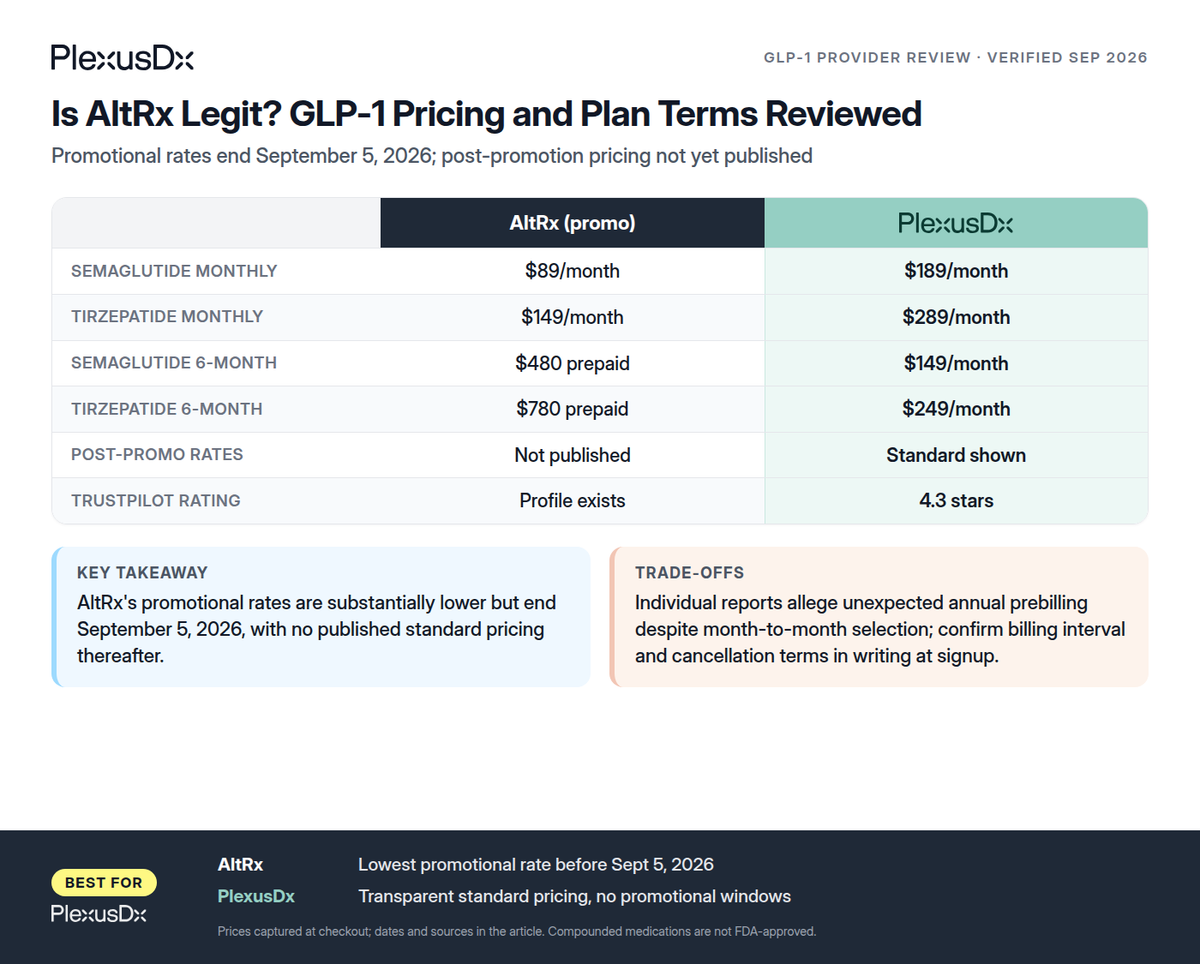
Is AltRx Legit? GLP-1 Pricing and Plan Terms Reviewed — 2026 Verified
AltRx offers compounded semaglutide and tirzepatide injections at promotional rates valid through September 5, 2026, with no separate membership fees. We review the pricing structure, cancellation terms, and service reliability reports to help you decide if the program fits your situation.
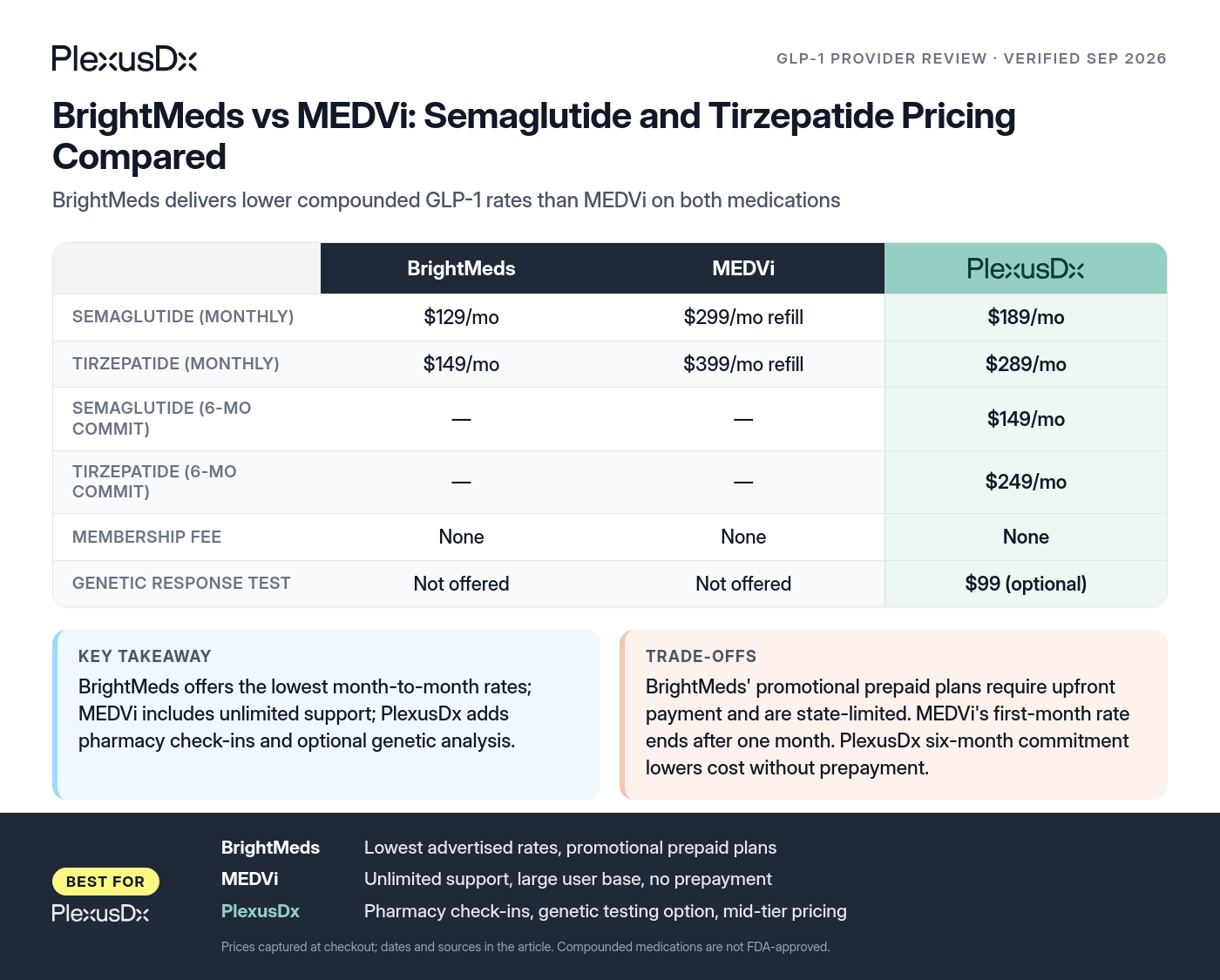
MEDVi vs Brightmeds: Injection Prices & Plans
MEDVi and BrightMeds price compounded GLP-1 injections in different shapes: MEDVi with a lower first month and a higher refill, BrightMeds with one landing-page rate per medication and optional 3-month packs. This post compares semaglutide and tirzepatide injections separately, covers dose and renewal conditions, and shows where PlexusDx fits.
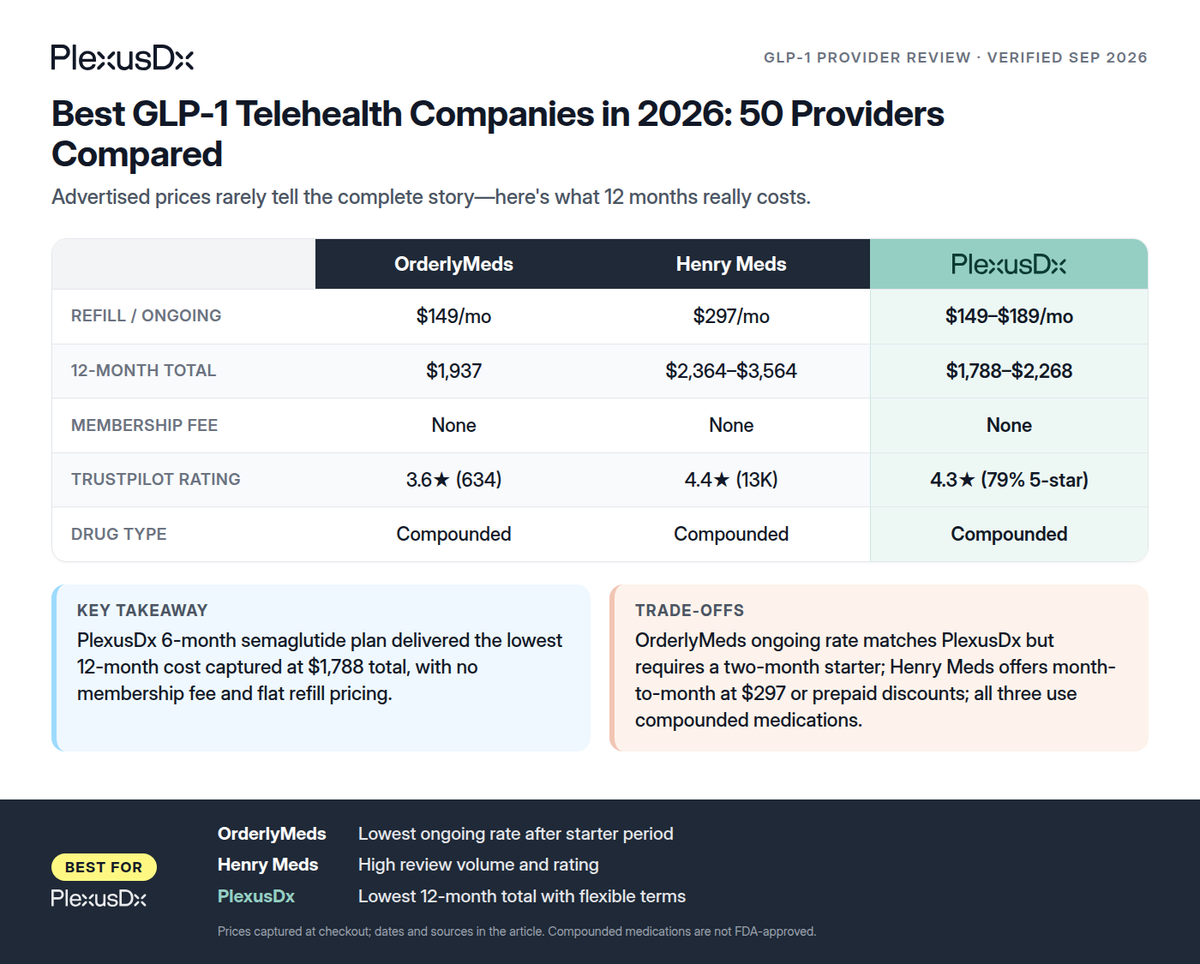
Best GLP-1 Telehealth Companies in 2026: 50 Providers Compared
We reviewed 50 GLP-1 telehealth providers and evaluated pricing structure, medication access, membership requirements, and service quality across every major platform in 2026.
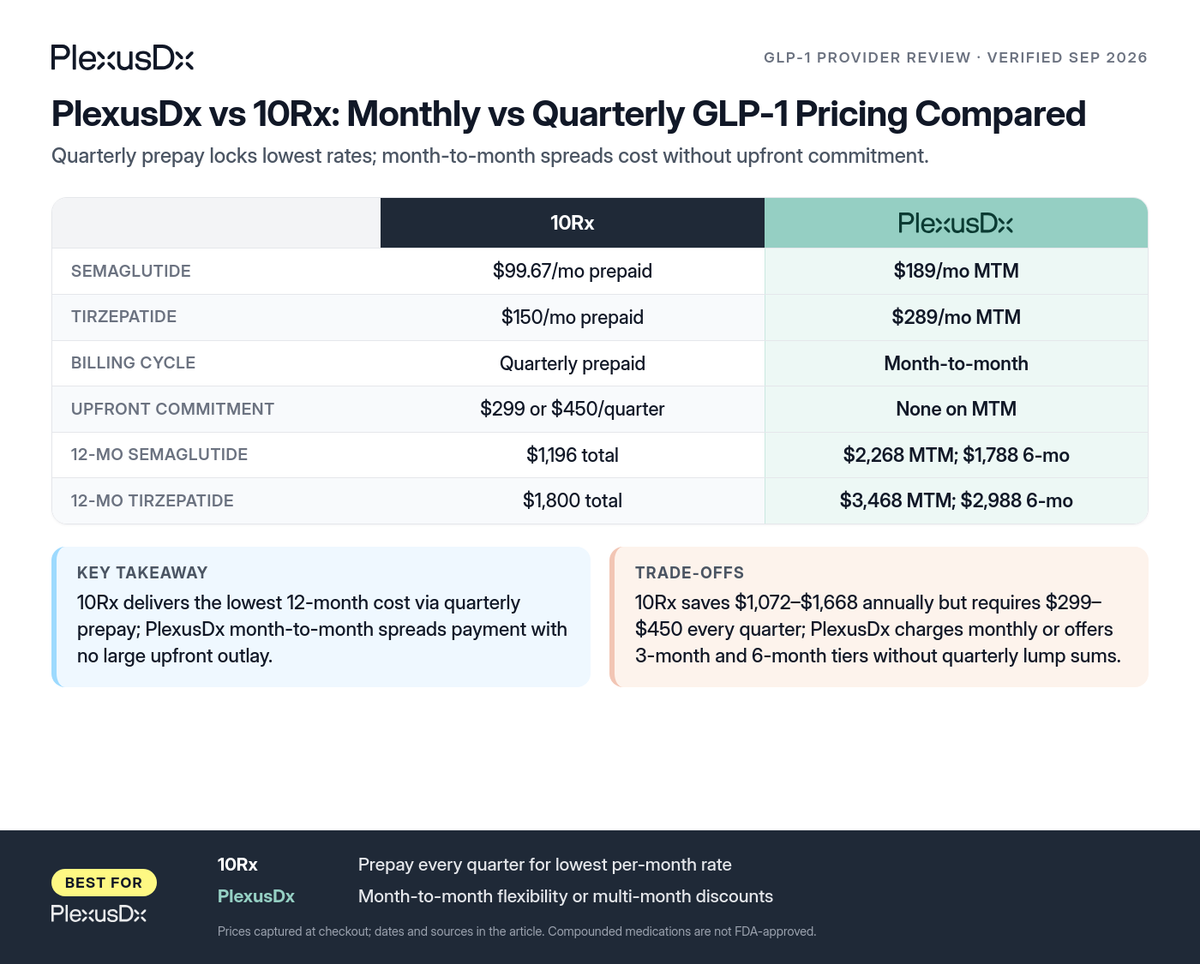
PlexusDx vs 10Rx: Monthly vs Quarterly GLP-1 Pricing Compared
10Rx's prepaid quarterly packages deliver the lowest per-month equivalent for compounded semaglutide and tirzepatide, but require upfront commitment. PlexusDx offers month-to-month flexibility and multi-month discounts. Here's what the structures cost over 12 months.
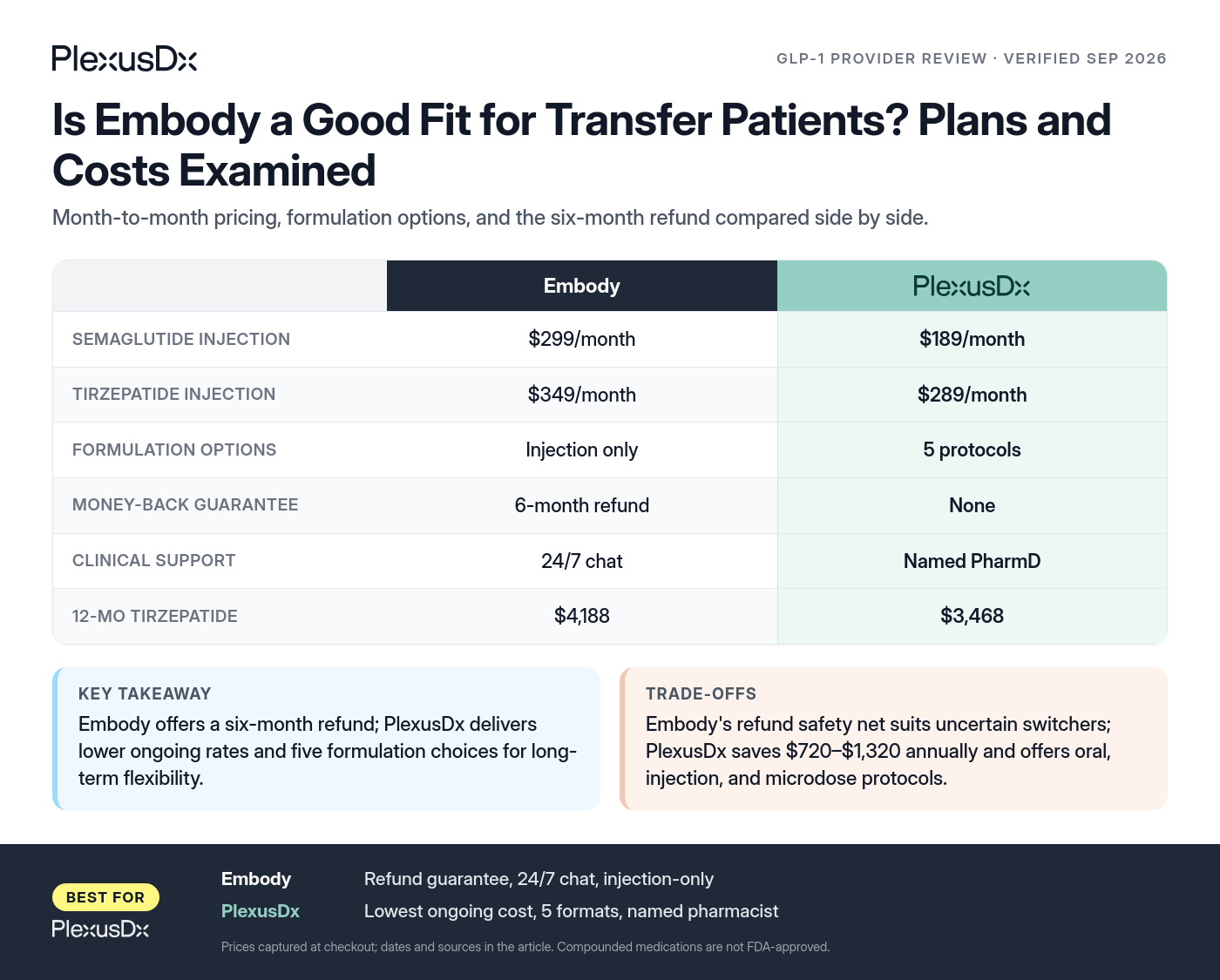
Is Embody a Good Fit for Transfer Patients? Plans and Costs Examined
Embody offers month-to-month GLP-1 injection plans starting at $299 for semaglutide and $349 for tirzepatide, with 24/7 clinical chat and a six-month money-back guarantee.
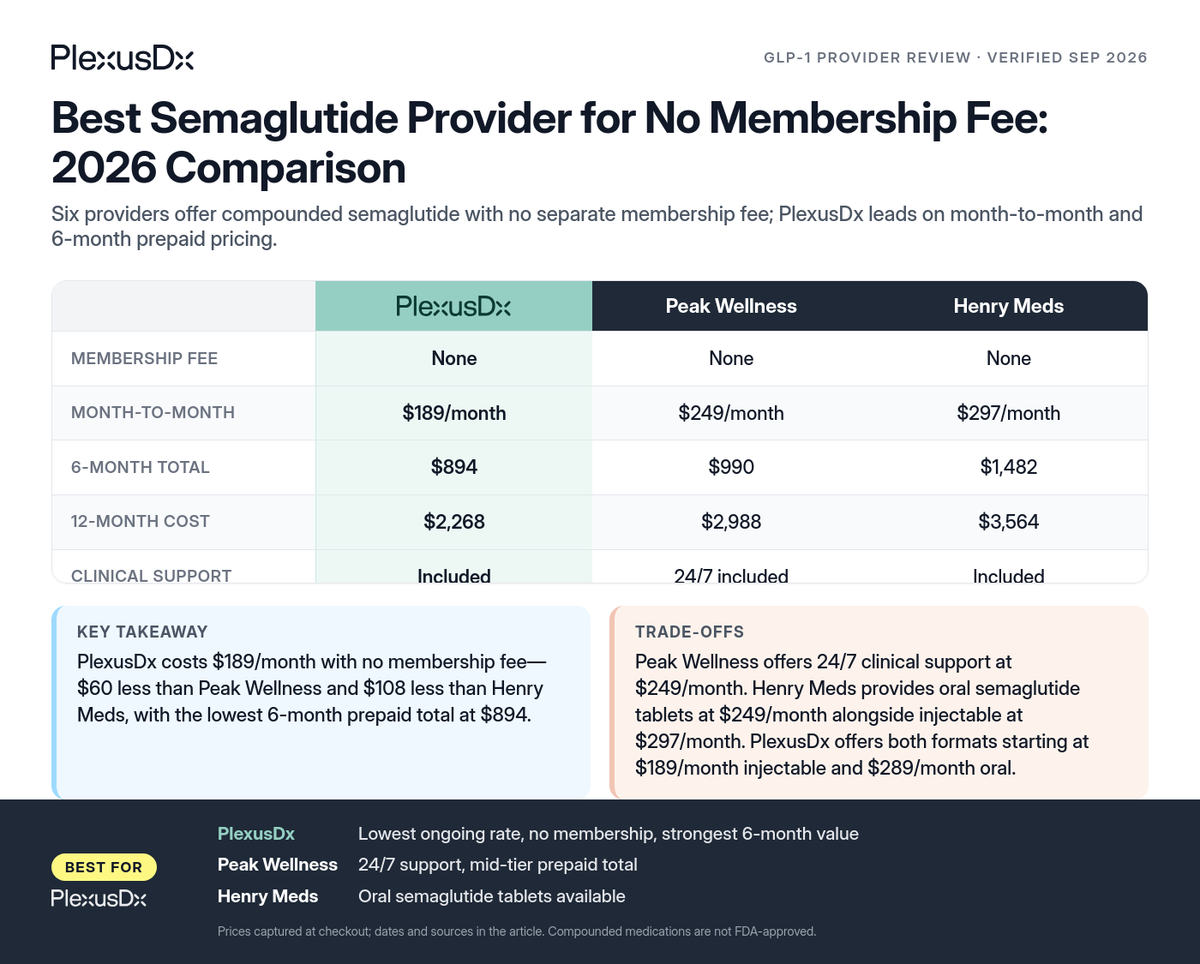
Best Semaglutide Provider for No Membership Fee: 2026 Comparison
Six providers offer compounded semaglutide with no separate membership fee in 2026. PlexusDx, Peak Wellness, Henry Meds, Embody, Found, and TrimRx bill medication only; Eden requires a $99/month membership on top of its $99/month medication price.
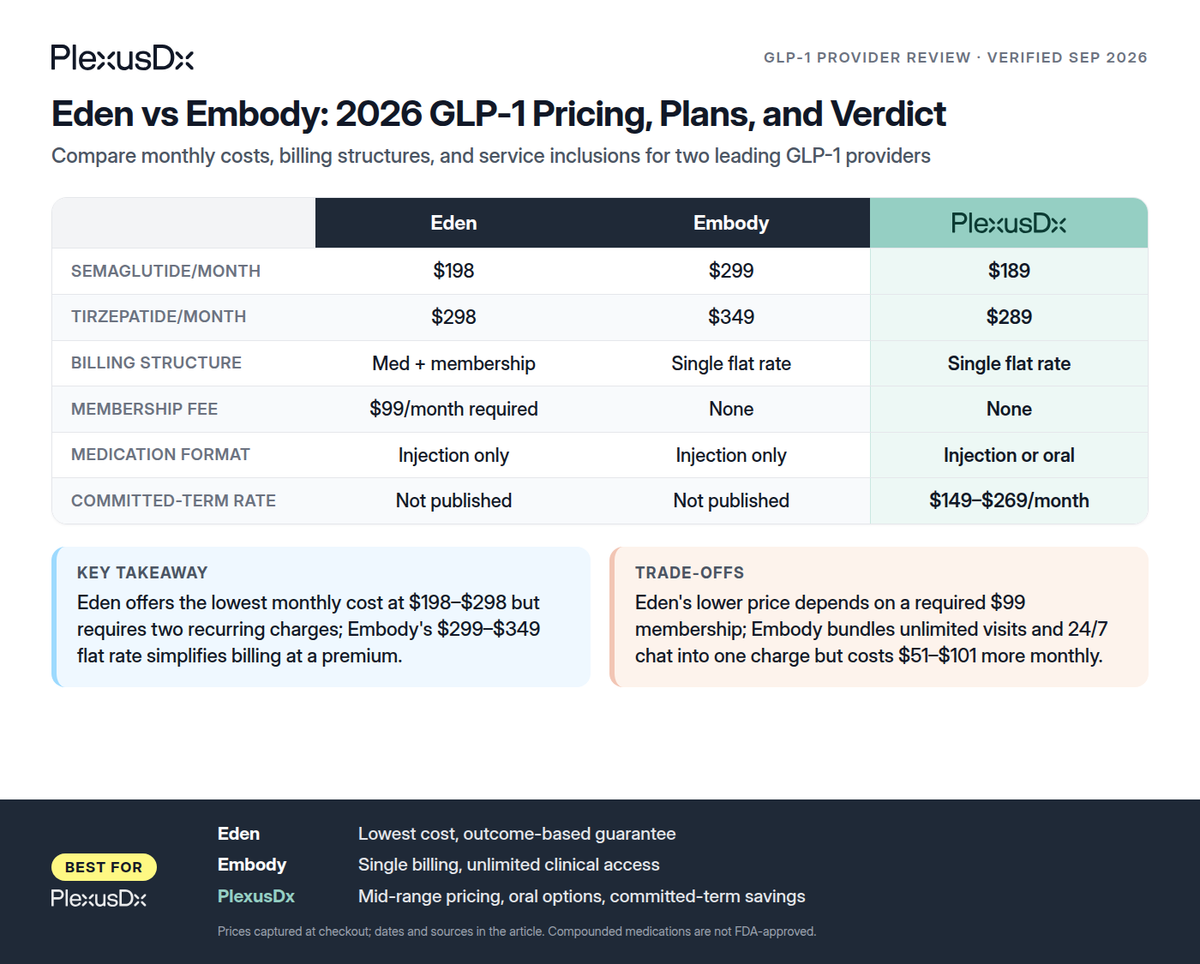
Eden vs Embody: 2026 GLP-1 Pricing, Plans, and Verdict
Eden charges $198–$298/month (medication plus required membership); Embody charges $299–$349/month (single flat rate). Both offer compounded semaglutide and tirzepatide injections with cancel-anytime terms, but their billing structures and service models differ substantially.
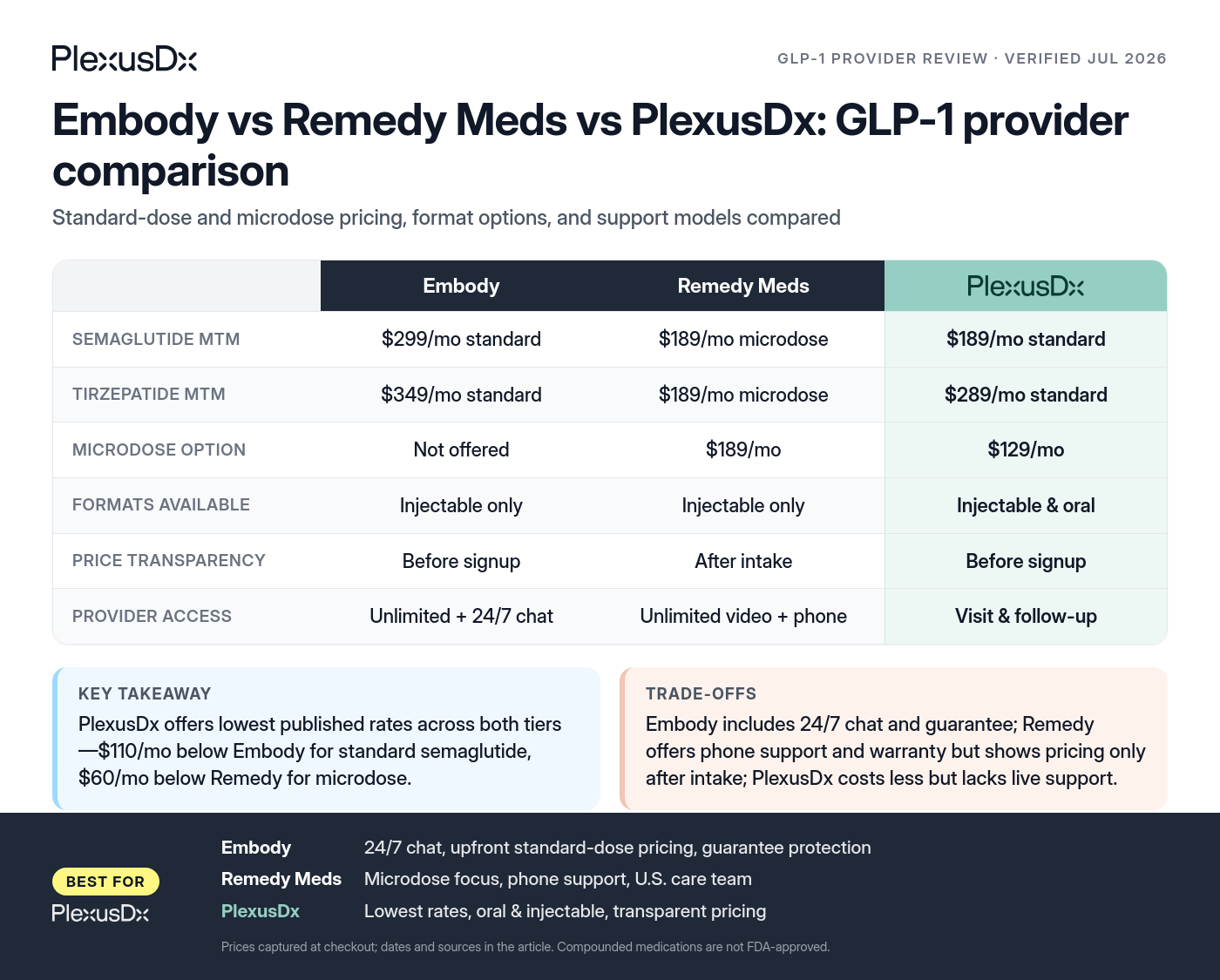
Embody vs Remedy Meds vs PlexusDx: GLP-1 provider comparison
Embody publishes standard-dose prices upfront at $299–$349/month. Remedy Meds shows microdose pricing ($189/month) only after intake. PlexusDx lists both tiers with committed-term options: $129/month for microdose and $189/month for semaglutide injection, month-to-month.

How to Switch from Tirzepatide to Semaglutide: A Clear Path to a Smooth Transition
Switching between GLP-1 medications requires a careful plan to maintain your weight loss momentum and minimize side effects. PlexusDx provides personalized guidance for transitioning from tirzepatide to semaglutide based on your individual response patterns.

What Happens If You Inject Semaglutide Into a Blood Vessel?
Semaglutide must be injected into fatty tissue under the skin, not into blood vessels. Accidental vein injection can cause rapid absorption and unpredictable side effects. PlexusDx provides detailed injection training to ensure safe, effective subcutaneous administration.

Is Sore Throat a Side Effect of Semaglutide?
Sore throat can occur during semaglutide treatment, though it is not listed as a common side effect in clinical trials. Understanding the potential causes—from nausea-related acid reflux to dehydration—helps you determine whether throat pain is treatment-related or requires medical attention.

Navigating Weight Loss: Can You Take Naltrexone and Semaglutide Together?
Combining naltrexone and semaglutide may enhance weight loss through different biological pathways, but safety and efficacy depend on individual health factors and medical supervision.

How to Take Oral Semaglutide Under Tongue: A Comprehensive Guide
Sublingual oral semaglutide delivery requires specific technique to optimize absorption and therapeutic benefit. PlexusDx provides step-by-step instructions on proper placement, timing, and what to expect during your weight loss journey.

Semaglutide Dosing: Do You Have to Take It on an Empty Stomach?
Semaglutide injections work regardless of whether you eat first, but understanding food timing can help you minimize nausea and maximize your treatment results.

How Long to Lose Weight on Compounded Semaglutide: A Comprehensive Guide
Most patients on compounded semaglutide begin noticing appetite reduction within 7-10 days, with measurable weight loss typically appearing by week 3-4 of treatment. Timeline and outcomes vary based on starting dose, metabolism, and individual GLP-1 receptor sensitivity.

NAD+ Semaglutide Timing — When to Take Each for Best Results
NAD+ and semaglutide work through different metabolic pathways, making timing crucial for maximizing their combined benefits. PlexusDx explains when to take each compound for best results.

How to Get Ozempic or Semaglutide in Miami
Miami residents can now access prescription semaglutide injections through PlexusDx at $189/mo month-to-month, or from $149/mo on the 6-month plan, with no insurance requirement and delivery to all Florida addresses.

Navigating the Unexpected: What to Do if You Take Too Much Semaglutide
Accidental semaglutide overdose can cause severe nausea, vomiting, and dehydration. Understand the warning signs, immediate steps to take, and when emergency care is necessary.

How Long Does It Take to Compound Semaglutide? A Comprehensive Guide
Compounded semaglutide typically requires 5-10 business days from prescription to delivery. PlexusDx partners with licensed 503A pharmacies that prioritize quality and safety during every step of the compounding process.

Understanding the Risks of Incorrect Semaglutide Injections
Semaglutide injection mistakes can reduce effectiveness and trigger unwanted side effects. Understanding proper technique, storage, and dosing helps you safely reach your weight loss goals with PlexusDx compounded therapy.
