Last reviewed: July 23, 2026
Last updated: July 23, 2026
Written by: Jay Hastings, CEO of PlexusDx
Jay Hastings is the CEO of PlexusDx, a precision health company focused on genetic testing, blood biomarker insights, and personalized wellness recommendations. He has more than 20 years of experience across healthcare innovation, genomics, laboratory operations, healthcare investing, and strategic finance.
Medically reviewed by: Jayden Lee, PharmD, EMBA
Jayden Lee, PharmD, EMBA, is the PlexusDx Medical Science Liaison with a PharmD and MBA specializing in pharmacogenomics and clinical product development. Dr. Lee has more than 10 years of professional experience in clinical pharmacy, academia, and research.
This article is part of the PlexusDx Education Hub — your resource for evidence-based guidance on precision health. Browse all Precision Health education
People increasingly explore at-home genetic testing, and two terms come up often: PGx (pharmacogenomics) and NGx (nutrigenomics). They study different biology, and it helps to understand what each is before making health changes. This article outlines how to think about getting started responsibly and how these tests differ from the PlexusDx Precision Peptide Genetic Test.
PGx vs NGx: Two Different Fields
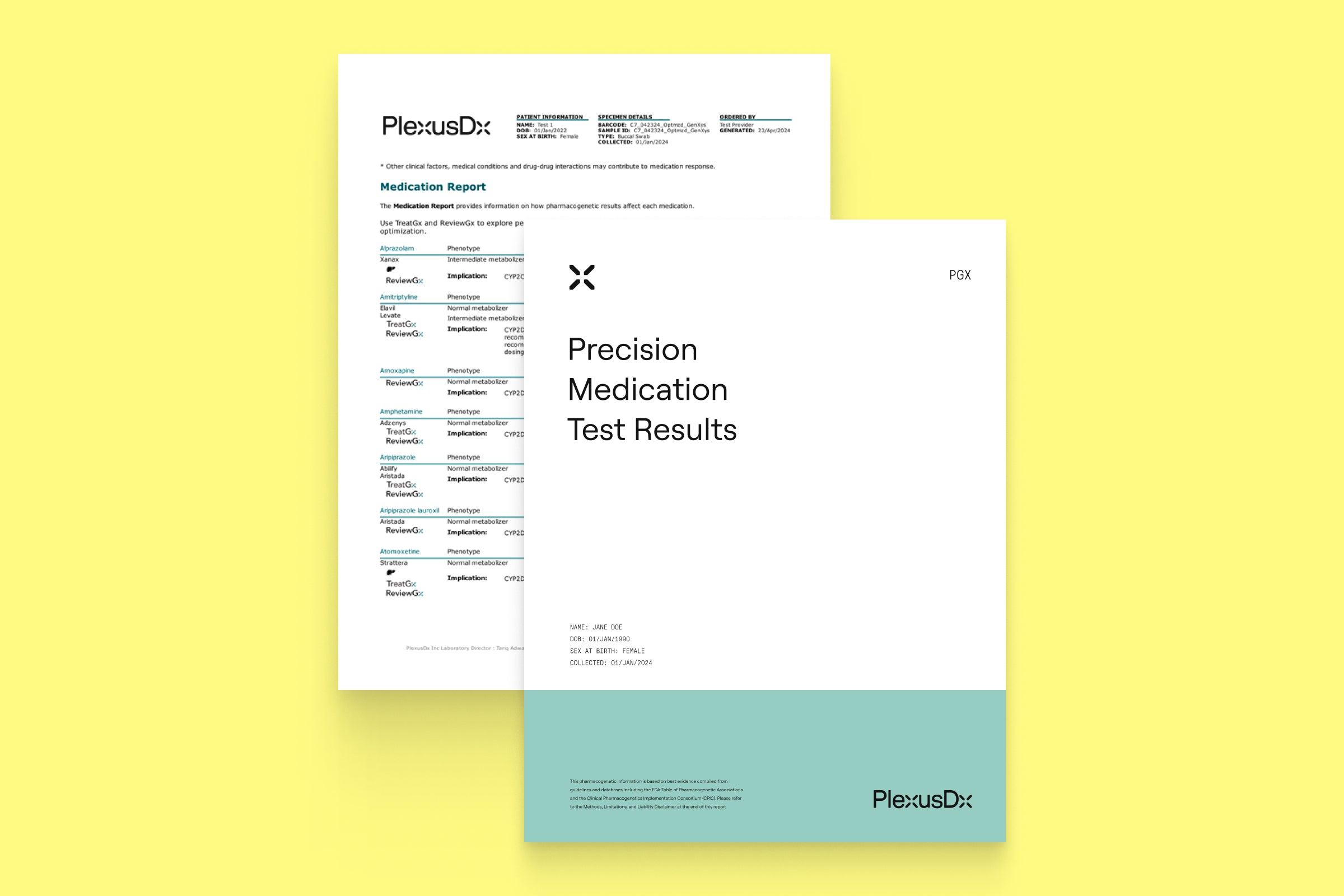
Pharmacogenomics (PGx) studies how genes affect medication metabolism, focusing on drug-metabolizing enzymes such as CYP2C19 and CYP2D6. Nutrigenomics (NGx) studies how genes influence your response to nutrients and diet. They answer different questions and use different, dedicated tests.
Steps to Get Started Responsibly
Start by clarifying your goal: understanding medication metabolism is a PGx question for your prescriber; understanding diet-and-nutrient response is an NGx question. Choose a test appropriate to that goal, read what it does and does not cover, and — for anything involving medications — involve a qualified healthcare provider or pharmacist before making changes.
Making Informed Changes
Genetic results are context, not commands. Never start, stop, or change a medication based on a genetic result alone, and discuss any diet or supplement changes with a professional where appropriate. Genetics is a guide, not a guarantee.
How PGx Differs From the Precision Peptide Genetic Test
This distinction matters, and PlexusDx states it plainly: PlexusDx does not sell or offer a pharmacogenomic (PGx) test. The PlexusDx Precision Peptide Genetic Test is not a pharmacogenomic test. It does not analyze drug-metabolizing enzymes and does not predict your response to any medication. Instead, it examines peptide-related biological pathways — spanning 14 pathways, 49 peptides, 150+ genetic insights — to offer pathway-level context about your baseline biology. If you want insight into how you metabolize a specific prescription, that is a separate pharmacogenomic conversation to have with your provider. Genetics is a guide, not a guarantee.
Using Genetic Information Responsibly
Whatever genetic testing you pursue, the principle is the same: never start, stop, or change a medication based on a genetic result alone. Bring any report to a qualified healthcare provider or pharmacist who can interpret it in the full context of your care, including your other prescriptions and health history. Used that way, genetic insight turns guesswork into a more informed conversation — genetics is a guide, not a directive.
Frequently Asked Questions
Are PGx and NGx testing the same thing?
No. PGx (pharmacogenomics) studies how genes affect medication metabolism; NGx (nutrigenomics) studies how genes affect your response to nutrients and diet. They use different, dedicated tests and answer different questions.
Is the Precision Peptide Genetic Test a pharmacogenomic test?
No. The Precision Peptide Genetic Test is not a pharmacogenomic test and does not predict response to any medication. PlexusDx does not sell a PGx test. The Precision Peptide Genetic Test analyzes peptide-related biological pathways for pathway-level context about your biology. For insight into how you metabolize a specific drug, ask your provider about dedicated pharmacogenomic testing.
Can I change my medications based on a genetic test?
No. Never start, stop, or adjust any medication based on a genetic result alone. Genetic information is one input among many, including your diagnosis, other drugs, and organ function. Always review any report with a qualified healthcare provider or pharmacist before making medication decisions.
Curious about your own peptide-pathway genetics? The Precision Peptide Genetic Test analyzes 14 pathways, 49 peptides, 150+ genetic insights — pathway-level context you can bring to your healthcare provider. It is educational insight into your biology, not a diagnosis, a prescription, or a pharmacogenomic test.
This article is part of the PlexusDx Education Hub. Browse all Precision Health education
PlexusDx does not sell or offer a pharmacogenomic (PGx) test. The Precision Peptide Genetic Test analyzes how your genes influence peptide-related biological pathways. It does not predict response to any specific medication and does not recommend, prescribe, or determine which peptides or drugs you should use. Consult a qualified healthcare provider before making any medication or peptide decision.
Medical and Editorial Standards
Medical review process: This article was reviewed for medical accuracy, scientific clarity, evidence alignment, and appropriate discussion of genetics, medications, supplements, biomarkers, and health-related claims.
Sources and evidence: PlexusDx educational content is developed using peer-reviewed research, clinical literature, reputable medical references, and, where applicable, public health or regulatory guidance.
Commercial transparency: PlexusDx offers genetic testing, blood biomarker testing, personalized supplement recommendations, and related precision wellness services. PlexusDx does not offer a pharmacogenomic test. Product mentions are intended to help readers understand available options and should not be interpreted as medical advice.
Important disclaimer: PlexusDx educational content is for informational purposes only and should not be used as a substitute for professional medical advice, diagnosis, or treatment. Always consult a qualified healthcare provider before making decisions about medications, supplements, genetic testing, lab testing, or health-related care.


Share:
Nutrigenomics for Athletes: Boosting Performance with Personalized Nutrition
What is Pharmacogenomics? A Beginner's Guide to Personalized Medicine