Last updated: May 12, 2026
Written by:
Jay Hastings
,
CEO of PlexusDx
Jay Hastings is the CEO of PlexusDx, a precision health company focused on genetic testing, blood biomarker insights, and personalized wellness recommendations. He has more than 20 years of experience across healthcare innovation, genomics, laboratory operations, healthcare investing, and strategic finance. His work has included scaling healthcare startups, leading CLIA lab integrations, and helping expand consumer access to precision health tools.
Free T3 (Triiodothyronine) Blood Test: A Vital Measure of Thyroid Function and Metabolic Health
The Free T3 (triiodothyronine) Blood Test provides valuable insight into thyroid health and overall metabolism. As part of the PlexusDx Women’s Health & Wellness Blood Test, this biomarker measures the active form of thyroid hormone circulating in the blood without being bound to proteins. While Free T3 represents only a small fraction—about 0.5%—of total T3, it exerts powerful effects on nearly every system of the body, influencing energy production, growth, brain function, and metabolic regulation.
What is Free T3?
Triiodothyronine (T3) is the most biologically active thyroid hormone. It is produced both directly by the thyroid gland and through the conversion of thyroxine (T4) into T3 in the liver and other tissues. While most T3 in the bloodstream is bound to carrier proteins and biologically inactive, the Free T3 fraction remains available to enter cells and regulate key physiological processes.
The Role of Free T3 in the Body
Even though Free T3 is present in tiny amounts, it has significant impacts on health and wellness:
-
Energy Production: Regulates mitochondrial function and determines how efficiently cells convert nutrients into usable energy.
-
Growth and Development: Plays a critical role in brain development, particularly during infancy and childhood, as well as bone growth and reproductive health.
-
Metabolic Health: Influences body temperature, heart rate, and overall metabolic rate.
-
Cholesterol Regulation: Promotes healthy lipid metabolism and helps maintain balanced cholesterol levels.
-
Blood Sugar Control: Improves insulin sensitivity, supporting stable blood glucose regulation.
Why Measure Free T3 Levels?
Because Free T3 directly reflects the hormone available for cellular activity, measuring it provides important insight into thyroid function and metabolic balance. This test is especially useful in the following cases:
-
Hyperthyroidism Diagnosis: Free T3 is often elevated in hyperthyroidism, even when Free T4 and TSH levels are normal.
-
Monitoring Thyroid Treatment: Helps track response to thyroid medications and hormone replacement therapy.
-
Unexplained Symptoms: Fatigue, weight changes, anxiety, hair loss, or irregular menstrual cycles may indicate thyroid imbalance.
-
Comprehensive Thyroid Assessment: Free T3 is typically interpreted alongside Free T4 and TSH for a complete evaluation of thyroid health.
Specimen Collection Method
The PlexusDx Women’s Health & Wellness Blood Test uses a dried blood spot (DBS) collection method with an ADX card. With a simple finger prick, you can collect a sample from home and mail it to the lab for analysis. This at-home method is accurate, convenient, and eliminates the need for an in-office blood draw.
Reference Ranges for Free T3
Reference ranges for Free T3 may vary slightly between laboratories, but general ranges include:
Standard Laboratory Ranges
-
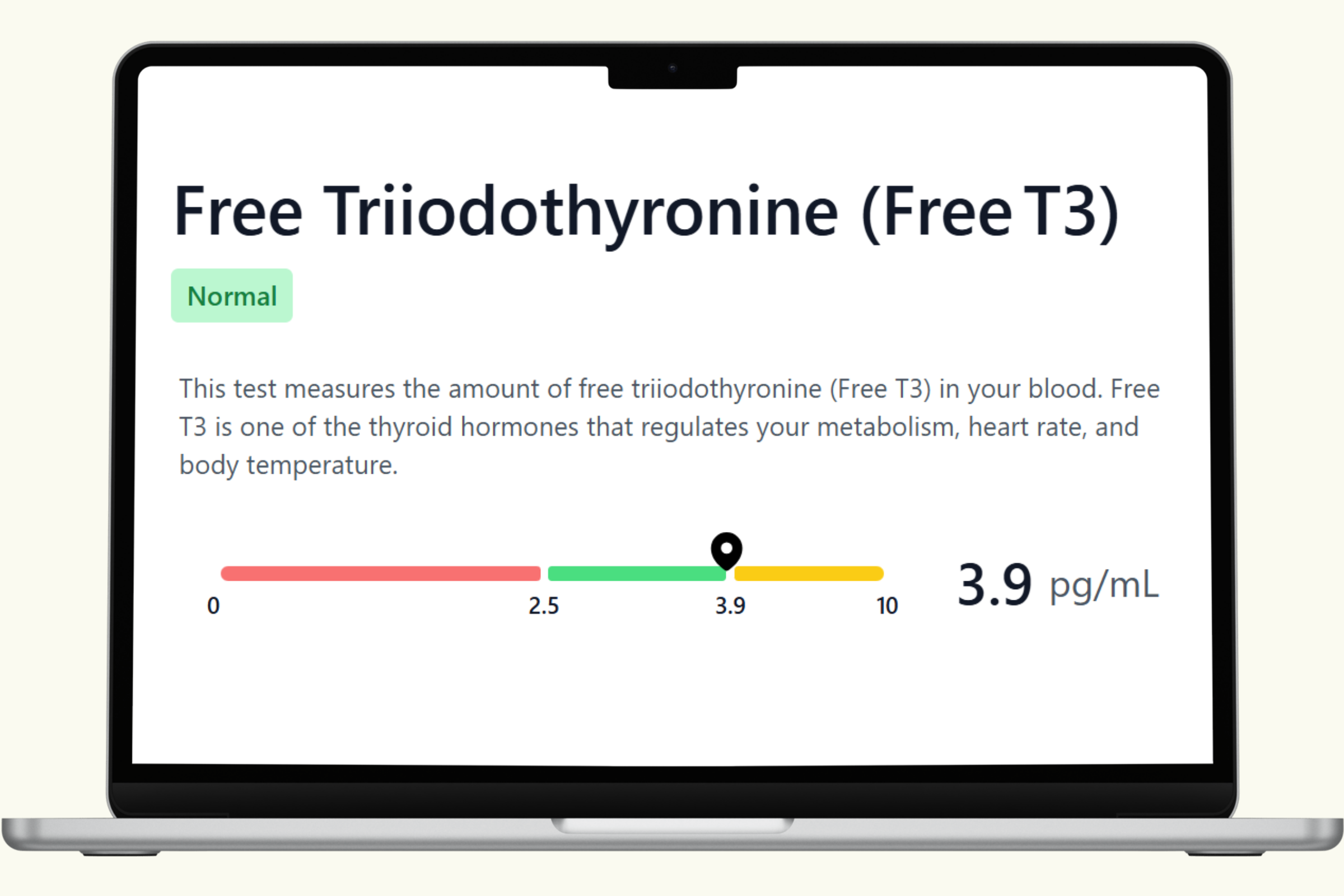
Adults: 2.3 – 4.2 pg/mL (3.5 – 6.5 pmol/L)
Functional and Optimal Ranges
Functional medicine often uses narrower ranges to identify subtle imbalances before they develop into more serious conditions:
-
Optimal Free T3: 3.2 – 4.0 pg/mL
Maintaining Free T3 within the optimal range supports energy production, mental clarity, healthy metabolism, and overall well-being.
Low Free T3 (Hypothyroidism or Conversion Issues)
Low Free T3 levels may indicate underactive thyroid function or poor conversion of T4 into T3. Common symptoms include:
- Fatigue and low energy
- Weight gain or difficulty losing weight
- Cold intolerance
- Brain fog, poor concentration, or memory issues
- Hair thinning or loss
- Depression or low mood
In some cases, individuals with normal T4 levels may still experience symptoms of hypothyroidism if their body struggles to efficiently convert T4 into T3, a condition sometimes referred to as “low T3 syndrome.”
High Free T3 (Hyperthyroidism)
Elevated Free T3 levels are often associated with hyperthyroidism or overactive thyroid function. Symptoms may include:
- Unexplained weight loss
- Rapid or irregular heartbeat (palpitations)
- Heat intolerance and sweating
- Nervousness, anxiety, or irritability
- Tremors or shaking
- Difficulty sleeping
Factors That Influence Free T3 Levels
Several factors can affect Free T3 results, including:
-
Stress: Chronic stress increases cortisol, which may inhibit T4-to-T3 conversion.
-
Nutrient Deficiencies: Low selenium, zinc, iron, and iodine can impair thyroid hormone production and conversion.
-
Medications: Certain drugs, such as beta-blockers, steroids, and birth control pills, can influence Free T3 levels.
-
Chronic Illness: Conditions like liver dysfunction or systemic illness may lower T3 conversion efficiency.
How to Support Healthy Free T3 Levels
If Free T3 levels are not in the optimal range, strategies to restore balance may include:
-
Nutritional Support: Adequate intake of selenium, zinc, iodine, and iron supports thyroid hormone production and conversion.
-
Stress Reduction: Managing stress helps lower cortisol, allowing for better T4-to-T3 conversion.
-
Lifestyle Balance: Regular exercise, restorative sleep, and balanced nutrition all promote thyroid health.
-
Medical Management: Thyroid hormone replacement therapy or antithyroid medications may be recommended depending on results and symptoms.
Free T3 and Whole-Body Health
Because Free T3 is the most active thyroid hormone, it plays a vital role in nearly every system of the body. From brain function and mood regulation to cardiovascular health and metabolism, Free T3 levels provide a direct window into cellular energy production and overall well-being. Monitoring this biomarker is an important part of proactive health management, especially for women experiencing hormonal or metabolic concerns.
Why Choose PlexusDx?
The PlexusDx Women’s Health & Wellness Blood Test offers a simple, reliable way to measure Free T3 levels as part of a complete hormone and wellness panel. With at-home dried blood spot collection, you can access critical health insights without the inconvenience of a lab visit. The results help guide personalized recommendations to restore balance, improve energy, and support long-term health.
Key Takeaways
- Free T3 is the active thyroid hormone responsible for growth, metabolism, brain function, and energy production.
- Testing Free T3 helps diagnose hyperthyroidism, assess thyroid function, and explain symptoms such as fatigue or weight changes.
- Optimal Free T3 levels (3.2 – 4.0 pg/mL) support energy, mental clarity, and metabolic balance.
- Both low and high Free T3 can have wide-ranging effects on health, making accurate testing essential.
- The PlexusDx at-home dried blood spot test provides convenient and comprehensive insights into thyroid health.
By including Free T3 testing in the PlexusDx Women’s Health & Wellness Blood Test, women gain powerful information about their thyroid function and overall health. This knowledge empowers you to take proactive steps toward better energy, hormonal balance, and long-term wellness—all from the comfort of home.
Frequently Asked Questions About Free T3 Blood Test
What does a Free T3 blood test measure and why is it important?
The Free T3 (triiodothyronine) blood test measures the active, unbound form of T3 circulating in your blood. Because Free T3 is the most biologically active thyroid hormone and influences energy production, growth, brain function, metabolic regulation, cholesterol balance, and blood sugar control, it provides a direct window into how much thyroid hormone is available for cellular activity. In the PlexusDx Women’s Health & Wellness Blood Test, Free T3 is assessed without protein binding, making it especially useful for evaluating thyroid function and metabolic balance.
When might Free T3 levels be high or low?
High Free T3 levels are often associated with hyperthyroidism or overactive thyroid function and may come with symptoms like unexplained weight loss, palpitations, heat intolerance and sweating, anxiety or irritability, tremors, and sleep difficulty. Low Free T3 levels may indicate underactive thyroid function or poor conversion of T4 into T3 (sometimes described as “low T3 syndrome”), and may cause fatigue, weight gain or difficulty losing weight, cold intolerance, brain fog, hair thinning or loss, and low mood or depression. Free T3 is also commonly interpreted alongside Free T4 and TSH for a complete assessment.
How do you test Free T3 at home, and what can you do if it’s not in an optimal range?
Free T3 can be tested using the PlexusDx Women’s Health & Wellness Blood Test with at-home dried blood spot (DBS) collection on an ADX card. You collect a sample via a simple finger prick, then mail it to the lab for analysis—no in-office blood draw required. Typical standard reference ranges may vary by lab (for example, adults 2.3–4.2 pg/mL), while functional/optimal ranges often use narrower targets (optimal Free T3: 3.2–4.0 pg/mL). If results are outside the optimal range, support may include adequate nutrients involved in thyroid hormone production/conversion (such as selenium, zinc, iodine, and iron), stress reduction to support T4-to-T3 conversion, balanced lifestyle habits (exercise and restorative sleep), and—when appropriate—medical management such as thyroid hormone replacement or antithyroid medications.
What tests can help me learn more about Free T3 Blood Test?
The Functional Health Genetic Test delivers over 750 personalized genetic insights across 10 in-depth genetic reports to support whole-body, systems-level health understanding. The Womens Health and Wellness Blood Test translates your results into personalized, actionable guidance. Your healthcare provider can also recommend targeted blood tests based on your specific pathway results and health history to complement your genetic insights with current biomarker data.
Medical and Editorial Standards
Sources and evidence: PlexusDx educational content is developed using peer-reviewed research, clinical literature, reputable medical references, and, where applicable, public health or regulatory guidance. References are included at the end of the article when scientific, medical, or health-related claims are discussed.
Commercial transparency: PlexusDx offers genetic testing, blood biomarker testing, personalized supplement recommendations, and related precision wellness services. Product mentions are intended to help readers understand available options and should not be interpreted as medical advice.
Important disclaimer: PlexusDx educational content is for informational purposes only and should not be used as a substitute for professional medical advice, diagnosis, or treatment. Always consult a qualified healthcare provider before making decisions about medications, supplements, genetic testing, lab testing, or health-related care.


Share:
Cortisol Blood Test
Free T4 Blood Test